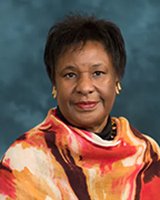
Professor and Chair
1 Learning Experience
Your browser is ancient!
Upgrade to a different browser to experience this site.

Why are some groups healthier than others, and how do these differences emerge and persist over a lifetime? How do social policies on housing, transportation, and employment relate to health and health inequalities?
This specialization will examine social, behavioral, economic, political, and structural factors that contribute to health inequalities, and suggest innovative ways to reduce disparities in health to achieve health equity.You will learn,
-Use conceptual models to understand health disparities in the U.S. and internationally.
-Access and use high-quality data sources to present statistics that illustrate the social-environmental-health issues within a community.
-Identify the main sources of these disparities from a population science perspective, and use public health evidence to inform policy efforts to address these disparities.
-Conduct community health needs assessments and identify evidence-based interventions.
Professor and Chair
1 Learning Experience

Associate Professor of Epidemiology
1 Learning Experience

Associate Professor of Epidemiology
1 Learning Experience

Millicent W Higgins Collegiate Professor of Epidemiology
1 Learning Experience
Course content developed by U-M faculty and managed by the university. Faculty titles and affiliations are updated periodically.
Beginner Level
No prior experience required.

Understand how social, economic, and political factors impact population health and contribute to health disparities in the U.S.

Understand how social environments and policies shape health outcomes and contribute to persistent health disparities.

Explore how to conduct community health assessments and design data-driven strategies to improve population health outcomes.

When you think about environmental influences on health, what's the first thing that comes to mind? Air pollution? Groundwater contamination? While the natural environment is critically important for human health, the social environment also has a profound impact on…
Belinda Needham, PhD Associate Professor of Epidemiology and Co-Director of the Center for Social Epidemiology and Population Health

When you think about environmental influences on health, what's the first thing that comes to mind? Air pollution? Groundwater contamination? While the natural environment is critically important for human health, the social enviroment also has a profound impact on phy…
Belinda L. Needham, Ph.D. Associate Professor of Epidemiology and Co-Director of the U-M Center for Social Epidemiology and Population Health