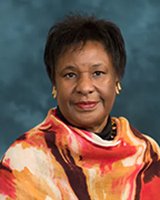
Professor Emerita of Health Behavior and Health Education, School of Public Health
Your browser is ancient!
Upgrade to a different browser to experience this site.

This is an introductory course on social determinants of population health with a focus on the United States. The course will introduce you to, or reinforce your knowledge of, issues related to health that consider behavioral, psychological and structural factors in population health beyond the healthcare system. We will examine social, economic, and political factors that contribute to health inequalities and suggest innovative ways to reduce disparities in health when the goal is to achieve health equity.
This course will increase your awareness, knowledge, and understanding of issues related to behavioral, psychological, and structural factors that contribute to understanding population health and health inequities. We will discuss conceptual and methodological issues key to health professionals working towards achieving health equity to reduce health disparities at multiple levels of influence. There will be opportunities to practice skills involving cultural humility, deliberative dialogues and professional self-assessments.
By the end of this course, you will be able to:
Discuss the means by which structural bias, social inequalities and racism undermine health and create challenges to achieving health equity at organizational, community and societal levels
Welcome to Social Determinants of Health, an introductory course examining how social, economic, behavioral, psychological, and structural factors shape population health in the United States. You will explore the root causes of health inequities and analyze how systems beyond healthcare influence outcomes. This course, the first in The Influence of Social Determinants on Health Specialization, emphasizes health equity and provides opportunities to practice skills with cultural humility.
This abbreviated syllabus description was created with the help of AI tools and reviewed by staff. The full syllabus is available to those who enroll in the course.
Module 1: Course Overview, Definitions, and Levels of Influence
Module 2: Disparities in Mortality and Morbidity by Psychosocial and Demographic Factors, Theoretical Considerations, and Environmental and Cultural Contexts
Module 3: Social Determinants of Health: The Healthcare System, Immigration Status, Sexual Identity, and Unconscious Bias
Module 4: Racism, Discrimination; Culture, Gender and Power; Changing Structures that Reproduce Bias and Harm Health
Learners are assessed through quizzes and a final peer-reviewed paper. To pass the course, learners must earn 80% or higher on each assignment. The five quizzes are worth 16% each and the final peer review paper is worth 20%.
Professor Emerita of Health Behavior and Health Education, School of Public Health
Course content developed by U-M faculty and managed by the university. Faculty titles and affiliations are updated periodically.
Beginner Level
No prior experience required