
Michael D. Cohen Collegiate Professor of Information
8 Learning Experiences
Your browser is ancient!
Upgrade to a different browser to experience this site.
In “Data-Oriented Python Programming and Debugging,” you will develop Python debugging skills and learn best practices, helping you become a better data-oriented programmer. Courses in the series will explore how to write and debug code, as well as manipulate and analyze data using Python’s NumPy, pandas, and SciPy libraries. You’ll rely on the OILER framework – Orient, Investigate, Locate, Experiment, and Reflect – to systematically approach debugging and ensure your code is readable and reproducible, ensuring you produce high-quality code in all of your projects. The series concludes with a capstone project, where you’ll use these skills to debug and analyze a real-world data set, showcasing your skills in data manipulation, statistical analysis, and scientific computing.
Michael D. Cohen Collegiate Professor of Information
8 Learning Experiences

Lecturer IV and Research Investigator
7 Learning Experiences

Lecturer IV
4 Learning Experiences
Course content developed by U-M faculty and managed by the university. Faculty titles and affiliations are updated periodically.
Intermediate Level
Learners should have completed Python 3 Programming or have equivalent experience with Python programming basics.
Learn structured debugging techniques in Python using loops, control structures, and the OILER framework to write and troubleshoot code effectively.

Learn NumPy and pandas to manipulate arrays and write efficient Python code for numerical computing and data analysis.
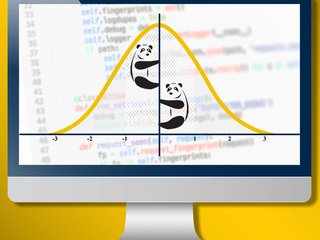
Apply Python and scientific libraries like NumPy and SciPy to solve statistical problems and explore probability, distributions, and relationships in data.
Apply debugging strategies and data science tools to analyze real-world datasets and document your coding process in a capstone project.

If you're like most students of programming, you see error messages and they bring some emotions between annoyance and panic. ... If you follow [the OILER] systematic process, you will find that you get better and better, and you start to be able to fix lots of bugs re…
Paul Resnick Michael D. Cohen Collegiate Professor of Information, School of Information