
Lecturer IV and Research Investigator
Your browser is ancient!
Upgrade to a different browser to experience this site.
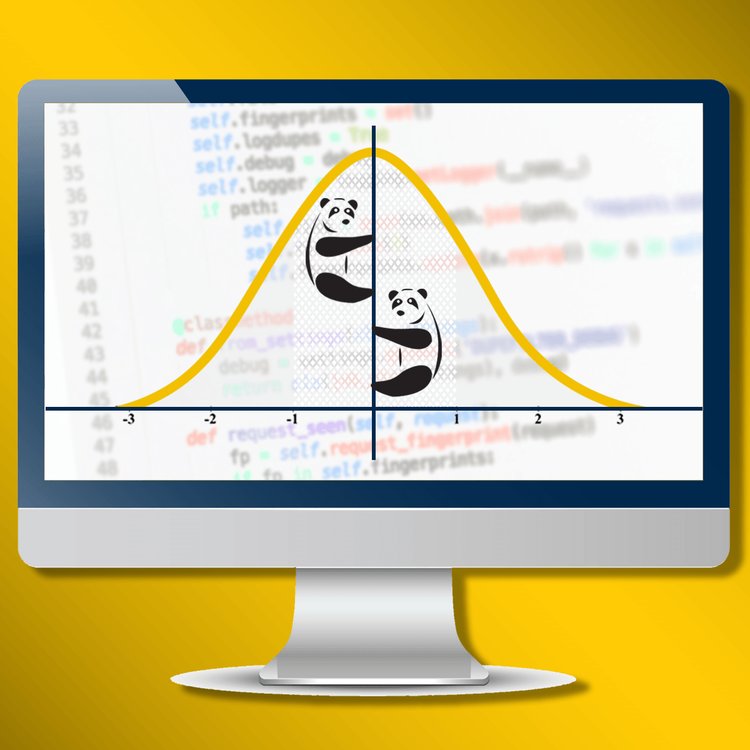
“Statistics with Python Using NumPy, Pandas, and SciPy” explores how to apply statistical and mathematical techniques to data science problems.
Throughout the first half of the course, you’ll work on reviewing vector dot products, interpreting text as vectors, and matrix multiplication. You’ll also explore the basics of probability, laying the groundwork for statistical analysis. In the second half, you’ll cover how to interpret data distributions, reason about probability, explore the special properties of normal distributions, understand linear relationships in data, and the connection between probability and uncertainty.
This is the third course in the four-course series “Data-Oriented Python Programming and Debugging,” where you’ll work to strengthen your programming capabilities and enhance your problem-solving skills.
Welcome to Statistics with Python Using NumPy, Pandas, and SciPy. This course builds applied statistics skills through hands-on data analysis using Python libraries. Learners practice data manipulation, visualization, and statistical inference in real-world contexts.
This abbreviated syllabus description was created with the help of AI tools and reviewed by staff. The full syllabus is available to those who enroll in the course.
Module 1: Vector Operations and Text Representation in Data Science
Module 2: Understanding and Visualizing Data Distributions
Module 3: Understanding and Analyzing Data Distribution Characteristics
Module 4: Sampling Methods and Statistical Inference
Learners must earn an overall grade of 80%. Assessments in each module account for 25% of your final grade.
Lecturer IV and Research Investigator

Michael D. Cohen Collegiate Professor of Information

Lecturer IV
Course content developed by U-M faculty and managed by the university. Faculty titles and affiliations are updated periodically.
Intermediate Level
Learners should complete "Python 3 Programming" on Coursera or have equivalent experience with Python programming basics.