
Jack L. Walker, Jr. Collegiate Professor of Public Policy
Your browser is ancient!
Upgrade to a different browser to experience this site.
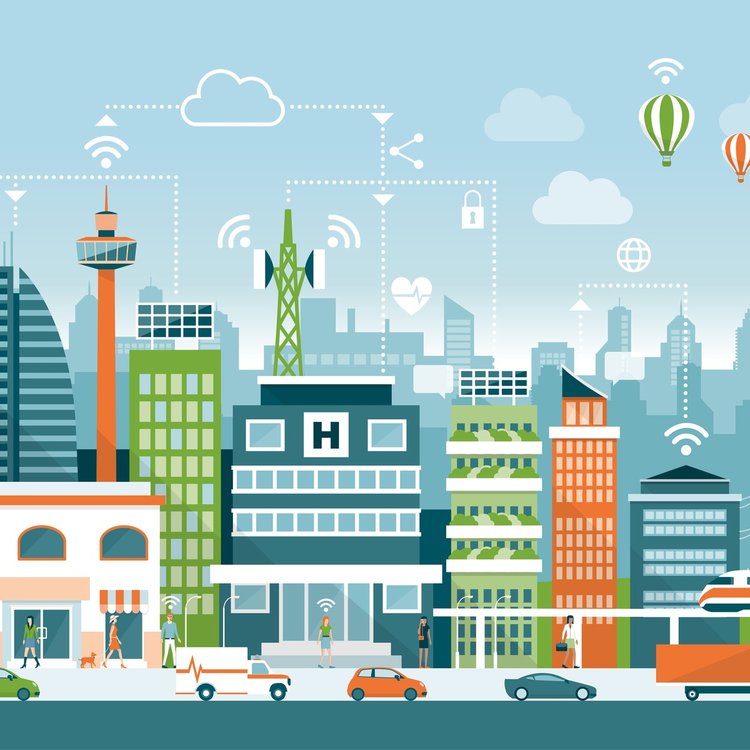
Welcome to the People, Technology, and the Future of Mobility course! This course provides a lay-person’s introduction to some of the major technological innovations currently underway in the mobility space and asks learners to apply a variety of social science concepts to understand the likely social impacts of these technologies. The course is appropriate for learners from all backgrounds and does not require prior training in engineering or social science.
The content presented in this course draws on a number of interviews and lectures and was created through a partnership with Siemens. The course also includes an interactive 360 video experience that allows learners to explore the key components of an autonomous vehicle, go on a ride-along in an autonomous car, and learn about new sensing technology we could see in smart cities of today and tomorrow.
This course challenges learners to envision mobility of the future that is safer, cleaner, and more equitable. We will examine recent technological advances, as well as the socio-economic and policy implications, of two major evolving mobility-related technology spaces: electrification and automation.
Welcome to People, Technology and the Future of Mobility, a course designed to explore the evolving landscape of transportation. You will examine electrification, vehicle automation, and the social, environmental, and equity impacts of these technologies. By the end of the course, you will understand both the technical foundations and the broader implications of mobility innovations. This abbreviated syllabus description was created with the help of AI tools and reviewed by staff. The full syllabus is available to those who enroll in the course.
Module 1: Course Introduction and Background
Module 2: Electrification—The Basic Technologies (Part 1)
Module 3: Electrification—The Basic Technologies (Part 2)
Module 4: Electrification—The Impacts
Module 5: Vehicle Automation—The Basic Technologies
Module 6: Automation—The Impacts
To earn a passing grade, all assignments require a minimum score of 80%. Quizzes are the primary method of assessment, with five quizzes worth 16% of your final grade each, and one quiz worth 20%.
Jack L. Walker, Jr. Collegiate Professor of Public Policy
Course content developed by U-M faculty and managed by the university. Faculty titles and affiliations are updated periodically.
Beginner Level
No prior experience required