
Your browser is ancient!
Upgrade to a different browser to experience this site.
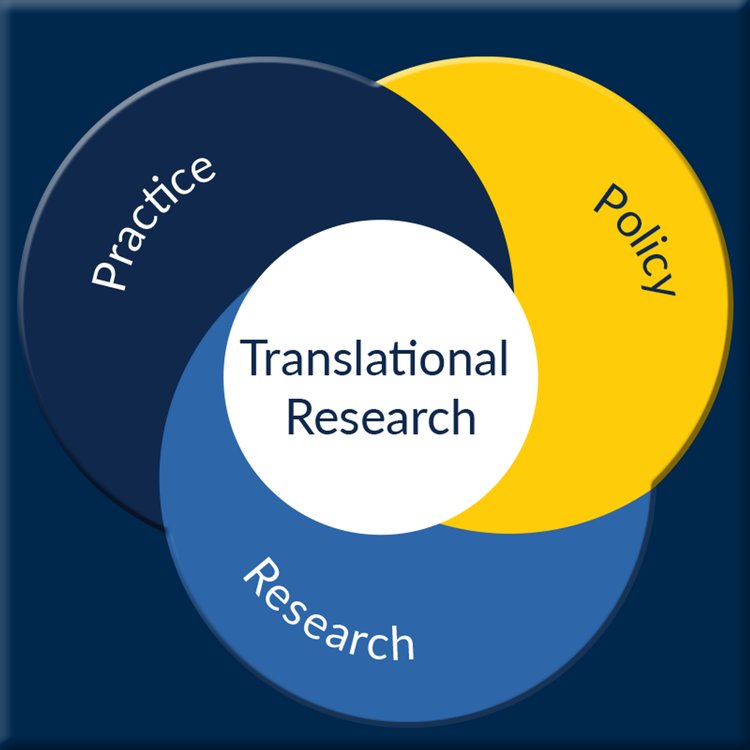
Introduction to Translational Science

What You'll Learn

  • Understand the role of translational science in moving scientific discoveries into applications for improving human health.
  • Understand the importance of addressing health disparities and inequities in translational science
  • Explore career opportunities within the in-demand field of translational science
4 Modules
12 Hours
3 hrs per module (approx.)
Rating

About Introduction to Translational Science

Translational science is the process of turning observations in the laboratory, clinic, and community into interventions that improve the health of individuals and populations. In this course, you’ll learn about the role of translational research in moving scientific discoveries into applications for improving human health. With an understanding of the four stages of translational research, you’ll be able to assess team roles for each stage and explain the importance of rigorous research, responsible conduct of research, and the differences between them. Finally, you’ll learn about career opportunities within the in-demand field of translational research.

This is an ideal introduction for undergraduate or graduate students interested in the practical application of their research to improve the health of their community.

This is the first course of five in the “Translational Science” series.

Skills You'll Gain

  • Clinical Translation
  • Healthcare Quality
  • Research
  • Translational Research

What You'll Earn

Certificate of Completion:
Certificates of completion acknowledge knowledge acquired upon completion of a non-credit course or program.
Experience Type
100% Online
Format
Self-Paced
Subject
  • Health
Platform
Coursera
Welcome Message

Welcome to Introduction to Translational Science, the first course in the Translational Science series. This course introduces the full spectrum of translational science and why it matters for improving health and communities. Designed for researchers and community members alike, you will explore how research moves from discovery to real-world impact, building confidence in understanding research processes, collaboration, and community-engaged approaches.

This abbreviated syllabus description was created with the help of AI tools and reviewed by staff. The full syllabus is available to those who enroll in the course.

Course Schedule

Module 1: Introduction to Translational Science

  • Reading: Welcome to Introduction to Translational Science
  • Reading: Pre-Course Survey
  • Reading: Syllabus
  • Reading: Acknowledgments
  • Reading: Pre-test and Post-test Instructions
  • Graded Assignment: Pretest-What is Translational Research?
  • Reading: What is Translational Research?
  • Video: What is Translational Research?
  • Reading: Translational Research in Practice: An Introduction
  • Reading: How to Use Your Course Workbook
  • App Item: Examples of Translational Research
  • Reading: (Optional but recommended) The Research Clinic

Module 2: Becoming a Translational Scientist

  • Reading: The Fundamental Characteristics of a Translational Scientist
  • App Item: How do the fundamental characteristics of a translational scientist apply to you?
  • Video: What is Team Science? Why is it Important?
  • Video: Choosing Translational Science as a Career Path: T1 Research
  • Video: Choosing Translational Science as a Career Path: T2 Research
  • Video: Choosing Translational Science as a Career Path: Clinical Research
  • Video: Choosing Translational Science as a Career Path: T3 Research
  • Video: Choosing Translational Science as a Career Path: T4 Research
  • Reading: How to Do Team Research
  • Reading: Lack of Transparency & Sample Size, Outliers and Exclusion Criteria
  • App Item: Rigor and Reproducibility

Module 3: Diversity, Mentorship, and Research Excellence

  • Reading: Why Diversity Helps to Produce Stronger Research
  • Reading: How Diversity Makes Us Smarter
  • Reading: Mentorship in Research
  • App Item: The Importance of Mentorship in Research
  • Reading: Individual Development Plan (IDP) Overview
  • App Item: Individual Development Plan (IDP) Draft

Module 4: Community-Engaged Research

  • Video: Community Engaged Research
  • Reading: Examples of Interviews
  • App Item: Research Career Paths: Translational Scientist Interview
  • Reading: Course Wrap-up
  • Reading: Post- Course Survey
  • Reading: Keep Learning with Michigan Online
  • Reading: Attribution Page
Grading Policy

Learners must earn an overall course grade of 80% to pass and must score between 80–100% on each graded item. Two quizzes are worth 45% of your final grade, and peer review is worth 55%.

Course content developed by U-M faculty and managed by the university. Faculty titles and affiliations are updated periodically.

Beginner Level

No prior experience required
Enrollment Options

Individuals

This experience is available to individual learners on the following platforms:

U-M Community

Students, faculty, staff, and alumni of the University of Michigan get free access.

Organizations

Special pricing and tailored programming bundles available for organizational partners.

What are Coursera and edX?

Michigan Online learning experiences may be hosted on one or more learning platforms. Platform features may vary, including payment models, social communities, and learner support.

Coursera

  • Hosts online courses, series, and Teach-Outs from Michigan Online
  • Enroll and preview courses anytime
  • May earn a non-credit certificate from Coursera

edX

  • Hosts online courses and series from Michigan Online
  • Many offer a free (limited) audit option
  • May earn a non-credit certificate from edX

For more information visit the What are Coursera and edX? FAQ section

Reviews and Ratings

4.1

9 Ratings from Coursera

Michigan Online
For You

Sign up for a Michigan Online account to customize your experience!