
Your browser is ancient!
Upgrade to a different browser to experience this site.
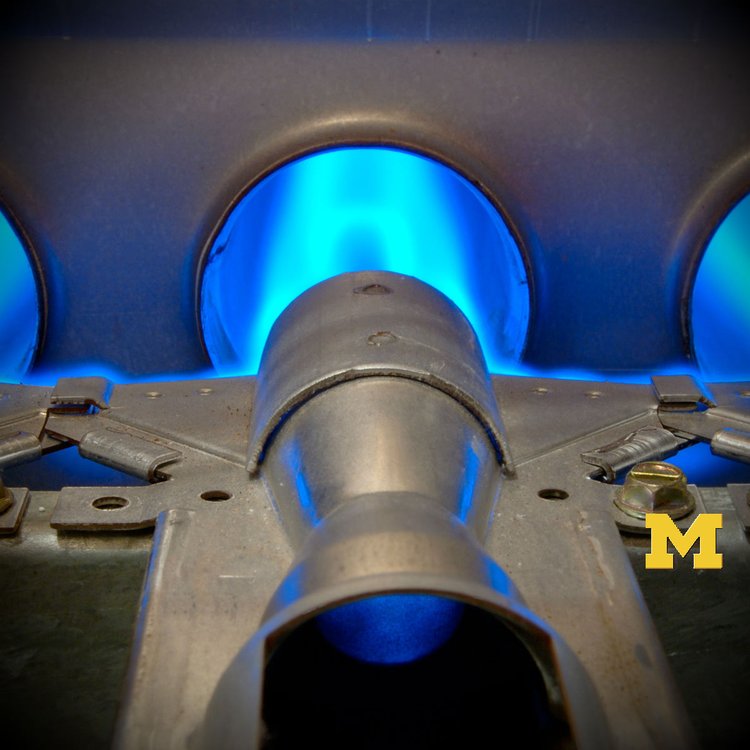
Introduction to Thermodynamics: Transferring Energy from Here to There

What You'll Learn

  • Understand the tools you need to analyze energy systems.
  • Understand energy systems and demands, and how they are deeply tied to challenges of clean water, health, food resources, and poverty.
8 Modules
16 Hours
2 hrs per module (approx.)
Rating

About Introduction to Thermodynamics: Transferring Energy from Here to There

This course provides an introduction to the most powerful engineering principles you will ever learn - Thermodynamics: the science of transferring energy from one place or form to another place or form. We will introduce the tools you need to analyze energy systems from solar panels, to engines, to insulated coffee mugs. More specifically, we will cover the topics of mass and energy conservation principles; first law analysis of control mass and control volume systems; properties and behavior of pure substances; and applications to thermodynamic systems operating at steady state conditions.

COURSE FORMAT
The class consists of lecture videos, which average 8 to 12 minutes in length. The videos include integrated In-Video Quiz questions. There are also quizzes at the end of each section, which include problems to practice your analytical skills that are not part of video lectures. There are no exams.

GRADING POLICY
Each question is worth 1 point. A correct answer is worth +1 point. An incorrect answer is worth 0 points. There is no partial credit. You can attempt each quiz up to three times every 8 hours, with an unlimited number of total attempts. The number of questions that need to be answered correctly to pass are displayed at the beginning of each quiz. Following the Mastery Learning model, students must pass all 8 practice quizzes with a score of 80% or higher in order to complete the course.

ESTIMATED WORKLOAD
If you follow the suggested deadlines, lectures and quizzes will each take approximately ~3 hours per week each, for a total of ~6 hours per week.

TARGET AUDIENCE
Basic undergraduate engineering or science student.

FREQUENTLY ASKED QUESTIONS
- What are the prerequisites for taking this course?
An introductory background (high school or first year college level) in chemistry, physics, and calculus will help you be successful in this class.
-What will this class prepare me for in the academic world?
Thermodynamics is a prerequisite for many follow-on courses, like heat transfer, internal combustion engines, propulsion, and gas dynamics, to name a few.
-What will this class prepare me for in the real world?
Energy is one of the top challenges we face as a global society. Energy demands are deeply tied to the other major challenges of clean water, health, food resources, and poverty. Understanding how energy systems work is key to understanding how to meet all these needs around the world. Because energy demands are only increasing, this course also provides the foundation for many rewarding professional careers.

Skills You'll Gain

  • Energy Analysis
  • Energy Transport
  • Engineering Analysis
  • Heat Transfer
  • Mechanical Engineering
  • Systems Thinking

What You'll Earn

Certificate of Completion:
Certificates of completion acknowledge knowledge acquired upon completion of a non-credit course or program.
Experience Type
100% Online
Format
Self-Paced
Subject
  • Science
Platform
Coursera
Welcome Message

Welcome to Introduction to Thermodynamics: Transferring Energy from Here to There, a foundational engineering course focused on how energy moves between systems and forms. Learners explore mass and energy conservation, properties of pure substances, and steady-state and transient system analysis, with applications ranging from engines to renewable energy systems.

This abbreviated syllabus description was created with the help of AI tools and reviewed by staff. The full syllabus is available to those who enroll in the course.

Course Schedule

Module 1

  • Video: 01.01 - Welcome and Introduction to the Course
  • Reading: Syllabus
  • Reading: Help us learn more about you!
  • Video: 01.02 - Drivers for Changing the Way We Use Energy
  • Video: 01.03 - The Units of Energy and Power and the Sectors of Energy Supply and Demand
  • Video: 01.04 - Defining Open and Closed Systems
  • Video: 01.05 - Thermodynamic Properties
  • Video: 01.06 - Conservation of Energy for Closed Systems
  • Graded: Week 1

Module 2

  • Video: 02.01 - Work Transfer Mechanisms
  • Video: 02.02 - Example: the Work Required to Compress Air
  • Video: 02.03 - The First Law of Thermodynamics for a Closed System
  • Video: 02.04 - Heat Transfer
  • Video: 02.05 - Phase Diagrams
  • Video: 02.06 - 2D Phase Diagrams
  • Graded: Week 2

Module 3

  • Video: 03.01 - Thermodynamic Properties and the Saturation Region
  • Video: 03.02 - Internal Energy, Enthalpy, and the Specific Heats
  • Video: 03.03 - The Incompressible Substance and the Ideal Gas Models for Equations of State
  • Video: 03.04 - More Outcomes of the Ideal Gas Model
  • Video: 03.05 - Conservation of Mass for Open Systems
  • Video: 03.06 - Steam Turbine Example - Part 1
  • Graded: Week 3

Module 4

  • Video: 04.01 - Flow Work and the Conservation of Energy
  • Video: 04.02 - Steady State, Steady Flow Devices
  • Video: 04.03 - Another Example: Compressing Water
  • Video: 04.04 - Steam Turbine Example - Part 2
  • Video: 04.05 - Example of Cooling a Microprocessor - Starting the Analysis
  • Video: 04.06 - Steam Tables Discussion
  • Graded: Week 4

Module 5

  • Video: 05.01 - Example of Cooling a Microprocessor - Finishing the Analysis
  • Video: 05.02 - Transient Analysis - Setting Up the Governing Equations
  • Video: 05.03 - Transient Analysis - Reformulating the Problem
  • Video: 05.04 - Cycle Analysis - Power Cycles
  • Video: 05.05 - Refrigeration and Heat Pump Cycles
  • Graded: Week 5

Module 6

  • Video: 06.01 - A Conceptual Introduction to the Second Law of Thermodynamics
  • Video: 06.02 - The Carnot Cycle
  • Video: 06.03 - The Rankine Power Plant
  • Video: 06.04 - A Brief Introduction to Ideal Performance and Entropy
  • Video: 06.05 - More Advanced Methods to Increase the Efficiency of Rankine Power Plants
  • Video: 06.06 - More Discussion on the Concepts and Theory of the 2nd Law of Thermodynamics
  • Graded: Week 6

Module 7

  • Video: 07.01 - Example of Analysis of a Rankine Power Plant - Part 1: Assigning the State Information (or Pin the Tail on the Donkey)
  • Video: 07.02 - Example of Analysis of a Rankine Power Plant - Part 2: Finding ALL the State Information
  • Video: 07.03 - Example of Analysis of a Rankine Power Plant - Part 3: Putting it all Together, Cycle Analysis
  • Video: 07.04 - Example of Analysis of a Rankine Power Plant - Part 4: What the Results Tell Us
  • Video: 07.05 - How we can Dramatically Improve Thermal Efficiencies - An Introduction to Waste Heat Recovery
  • Video: 07.06 - Let's Look Inside a Jet Engine
  • Graded: Week 7

Module 8

  • Video: 08.01 - Air Standard Power Cycles - The Brayton Cycle
  • Video: 08.02 - More Waste Heat Recovery - Combined Cycles
  • Video: 08.03 - Carbon Reserves and Global Warming
  • Video: 08.04 -Energy Carriers
  • Video: 08.05 - Setting the Bar for Performance
  • Video: 08.06 -The Hardware of Our Internal Combustion Engines
  • Reading: Post-course Survey
  • Reading: Keep Learning with Michigan Online
  • Graded: Week 8
Grading Policy

All eight graded assignments remain open for self-paced learning and are equally weighted at approximately 12.5% each. Successful course completion is based on satisfactory performance on all weekly graded assignments.

Course content developed by U-M faculty and managed by the university. Faculty titles and affiliations are updated periodically.

Beginner Level

No prior experience required

Enrollment Options

Individuals

This experience is available to individual learners on the following platforms:

U-M Community

Students, faculty, staff, and alumni of the University of Michigan get free access.

Organizations

Special pricing and tailored programming bundles available for organizational partners.

What are Coursera and edX?

Michigan Online learning experiences may be hosted on one or more learning platforms. Platform features may vary, including payment models, social communities, and learner support.

Coursera

  • Hosts online courses, series, and Teach-Outs from Michigan Online
  • Enroll and preview courses anytime
  • May earn a non-credit certificate from Coursera

edX

  • Hosts online courses and series from Michigan Online
  • Many offer a free (limited) audit option
  • May earn a non-credit certificate from edX

For more information visit the What are Coursera and edX? FAQ section

Reviews and Ratings

4.8

2849 Ratings from Coursera

Michigan Online
For You

Sign up for a Michigan Online account to customize your experience!