Tina Lasisi Talks Automation, the Importance of Context, and Asking the Right Questions About AI
In “Applied AI: Data Analysis, Workflows, and Decisions,” learners evaluate problems through a framework that helps them determine when—and when not—to use AI tools
When approaching a problem, the best first step isn’t always turning to artificial intelligence. In the Michigan Online course series “Applied AI: Data Analysis, Workflows, and Decisions,” learners start with understanding their goal, how to examine the information, and then decide how AI might fit into the solution.
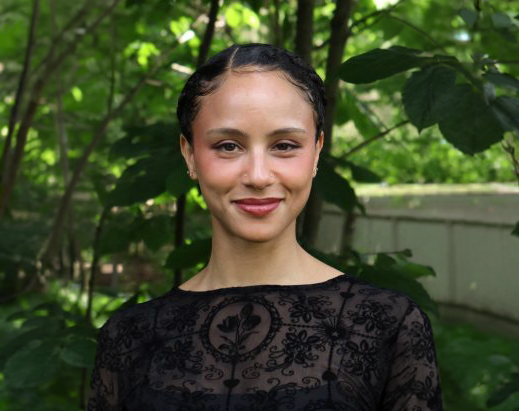
Tina Lasisi, assistant professor at the University of Michigan College of Literature, Science, and the Arts completed the three-course series to help learners navigate problem-solving tactics with the assistance of AI. A number of hands-on exercises guide learners through using AI to analyze data and implement workflows that can optimize personal and professional tasks.
Lasisi shared her thoughts on the vision for the new course series and why she hopes learners will build their critical thinking and keep a level of skepticism about AI tools. She also makes a pitch for bringing a beloved Pennsylvania franchise, and its cheese curds, to Ann Arbor.
-
With the launch of these final two courses, the “Applied AI: Data Analysis, Workflows, and Decisions” series is now complete. What was your vision for the full learning journey when you first began developing this series?
-
The biggest thing I wanted was for people to learn skills that would still be useful even when all of the specific AI tools we’re using right now have changed. Because they will! Things are moving so quickly that I didn’t want to make a series where the main takeaway was how to use a particular platform or where to click to make something happen.
Instead, I wanted to focus on the principles underneath all of that: how to figure out what problem you’re actually trying to solve, what information you need, how to get that information into a form you can use, and then how to evaluate whatever the AI gives you back.
That’s also why the courses move from data analysis, to workflows and automation, to decision-making. The goal is really to build up the higher-level thinking that lets you use whatever tools happen to be available.
-
The first course introduced learners to AI-powered data analysis. How do “Systems Thinking for AI & Automation” and “Rethink How You Decide with AI” build on that foundation and expand learners' implementation of AI?
-
The first course is really about using AI to help you do something fairly concrete: you have data, you want to learn something from it, and you need to figure out how to get from one to the other.
The automation course takes that same kind of thinking and applies it to workflows. So instead of immediately asking, “How do I automate this?”, we spend a lot of time asking whether something should be automated at all, what the actual goal is, what information the process depends on, and what happens when something changes or breaks.
Then the decision-making course takes it another step further. The point isn’t to ask AI to make your decisions for you. It’s to use it to help surface options, identify things you might not have considered, and challenge your reasoning. You still have to know your own context well enough to decide whether any of that advice is actually useful.
-
The course series covers data analysis, automation, and decision-making. What advantages do learners gain from studying these skills together as an integrated system?
-
I think one of the useful things about putting them together is that you start to realize the same basic questions keep coming up.
What are you actually trying to do? What information do you need? What assumptions are you making? What parts can a tool help with, and what parts still require you to understand the context?
That’s true whether you’re analyzing a dataset, setting up an automation, or trying to make a decision.
I also really wanted people to get out of the habit of starting with the tool. There’s always going to be some new AI thing that can suddenly do something impressive, and it’s very easy to start looking around for places to use it. Sometimes that makes sense! But sometimes the simpler solution is better, and sometimes the thing you’re trying to automate was not actually the problem in the first place.
-
Many people are curious about AI but also have concerns about issues like bias, transparency, or environmental impact. How does this course series help learners navigate those concerns while using AI responsibly?
-
I think the responsible-use part has to be built into how you use AI rather than being a separate disclaimer where we say, “By the way, AI can be biased.”
A lot of the course is really about maintaining some skepticism about what the tool is giving you. What information does it not have? What assumptions is it making? Is it actually right, or does it just sound very confident?
And especially in the decision-making course, we talk about the fact that advice from AI has the same basic problem as advice from a person: they may be missing really important context about your situation.
The automation course also spends a lot of time on whether using AI or automation is actually worth it. There are costs in time, maintenance, complexity, resources, and potential errors. “Can I automate this?” and “Should I automate this?” are two different questions, and I think people need to be comfortable asking both.
-
What is one topic you are a "total nerd" about outside of your professional field?
-
I would say AI, except I don’t know if I can still say that AI is outside of my professional field now that I’ve made a whole three-course series about how to use it. So… can we pretend that it still counts? Cause I don’t have a better answer, haha.
-
What's your favorite place to unwind in Ann Arbor when you need a break from work?
-
When I need a break from work, it means I probably need a snack. So I’m going to cheat slightly and say the Sheetz in Ypsilanti. I went to grad school in Pennsylvania, so I have a longstanding attachment to Sheetz and, more specifically, their fried cheese curds.
I was extremely excited when one finally opened close to Ann Arbor. So until Ann Arbor gets its own Sheetz, that’s my answer. And when one does finally open in Ann Arbor, I will have a completely legitimate answer to this question.