
Professor of Climate and Space Sciences and Engineering
Your browser is ancient!
Upgrade to a different browser to experience this site.
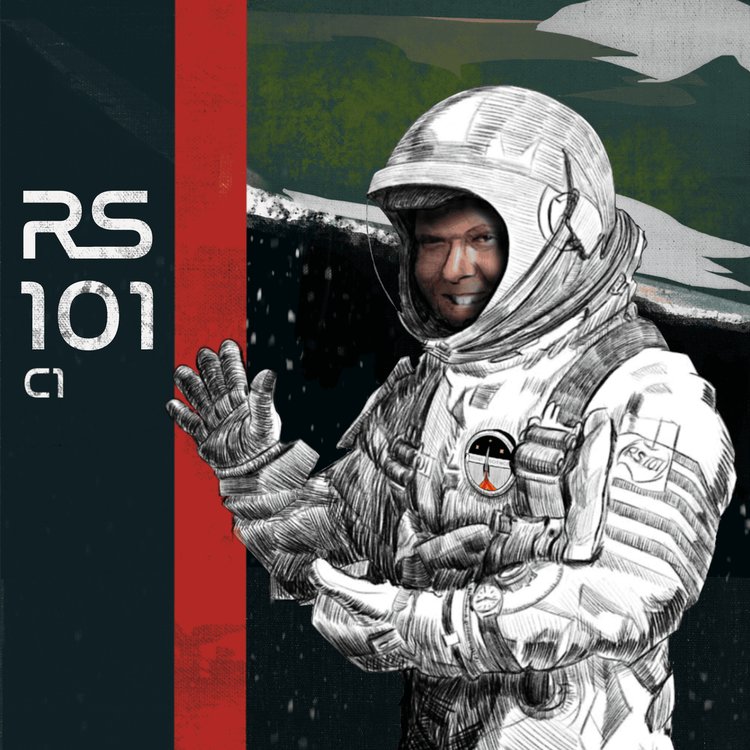
Why are rockets so big? Is there gravity in space? How does a rocket engine even work? In this course, you’ll explore the major concepts of rocket science, including orbital dynamics, velocity, and different types of engines that help propel a rocket out of Earth’s atmosphere. Determine how rocket scientists use formulas and Newton’s laws to propel rockets off the ground and accelerate them to their destination. Explore how and why rockets have stages, including how rocket scientists choose between solid and liquid engines for rockets. With The Basics of Rocket Science, you’ll even get an inside look at how we might get humans to Mars, an advancement in rocket science that could change humanity's future.
Welcome to The Basics of Rocket Science, the first course in the Rocket Science 101 specialization. Learners explore motion and forces, orbital mechanics, rocket engines and propulsion, and future space missions through accessible, concept-driven lessons.
This abbreviated syllabus description was created with the help of AI tools and reviewed by staff. The full syllabus is available to those who enroll in the course.
Module 1: Motion and Forces
Module 2: Basics of Orbit
Module 3: Basics of Rocket Engines
Module 4: The Future of Rocket Science
Learners must pass all four module quizzes, which are each worth 25% of their final grade.
Professor of Climate and Space Sciences and Engineering
Course content developed by U-M faculty and managed by the university. Faculty titles and affiliations are updated periodically.
Beginner Level
There is no required background, as the material is introductory. Some algebra-level mathematical concepts are discussed, but not required to know.