
Your browser is ancient!
Upgrade to a different browser to experience this site.
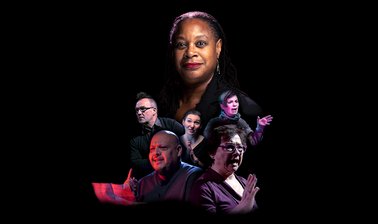
Storytelling for Social Change

5 Modules
15 Hours
3 hrs per module (approx.)

About Storytelling for Social Change

How can storytelling promote social change?

This course develops skills for using stories to deliver messages that affect audiences and shape attitudes for social change. Learn how building empathy and developing characters can offer multiple perspectives on complex problems. Social change happens when listeners or viewers identify with messages delivered through a protagonist they identify with. Theatre artists and professional storytellers offer expertise about how to craft a story that develops empathy and delivers impact.

You will watch video interviews with storytelling experts, view performances, and write your own story for social change. See how stories told from diverse perspectives contribute to understanding new perspectives about pertinent world issues. Learn how effective storytelling can be your tool for change.

This course is for anyone who wants to effectively tell an impactful story. This includes (but is not limited to):

  • Professionals working in not-for-profit or commercial sectors
  • Entertainment industry development teams
  • Writers and arts enthusiasts
  • Community workers and social activists
  • Marketing and development teams
  • Educators and public speakers
  • Customer service representatives

Please check out the course preview video in YouTube!

Skills You'll Gain

  • Community Advocacy
  • Empathy
  • Public Speaking Preparation
  • Storytelling

What You'll Earn

Certificate of Completion:
Certificates of completion acknowledge knowledge acquired upon completion of a non-credit course or program.
Experience Type
100% Online
Format
Self-Paced
Subject
  • Arts & Culture
  • Social Sciences
Platform
edX
Welcome Message

Welcome to Storytelling for Social Change, a course that builds skills for using story to raise awareness, build empathy, and influence attitudes around complex social issues. Learners explore character, audience, and message while developing an original storytelling project through reflection, peer feedback, and performance-based examples.

This abbreviated syllabus description was created with the help of AI tools and reviewed by staff. The full syllabus is available to those who enroll in the course.

Course Schedule

Module 1: Introduction: Belief Systems

  • Welcome to Storytelling for Social Change
  • Priscilla Lindsay on Belief Systems
  • Belief Systems
  • Additional Readings & Media
  • Reflection: Your Belief System
  • Writing Activity: Share a Story

Module 2: Inciting Empathy

  • Introduction and Overview
  • Malcolm Tulip on Empathy
  • Empathy
  • Additional Readings & Media
  • Module 2 Quiz (10 Questions)
  • Writing Activity: Two Sides to the Story

Module 3: Story Structure Analysis, Audiences, and Social Change

  • Introduction and Overview
  • Holly Hughes on Story Structure and Audience
  • Ashley Lucas on the Bridge between Storytelling and Social Change
  • Additional Readings & Media
  • Module 3 Quiz (8 Questions)
  • Story Development: Audience, Message, and Character

Module 4: Story Structure, Character Building, and Impact

  • Introduction and Overview
  • Jose Casas on Storytelling for Social Change
  • Additional Readings & Media
  • Module 4 Quiz (7 Questions)
  • Story Development: Outlining

Module 5: Storyboarding

  • Introduction and Overview
  • Vince Mountain on Scene Design
  • Christianne Myers and Costume Design
  • Perspectives of Storytelling Practitioners
  • Additional Readings & Media
  • Module 5 Quiz (10 Questions)
  • Story Development: Artist Statement and Storyboard
  • Submit your work to the gallery
  • Conclusion
Grading Policy

Learners pursuing a certificate must earn an overall grade of 75%. The course grade is based on four module-end quizzes worth 25% each.

Course content developed by U-M faculty and managed by the university. Faculty titles and affiliations are updated periodically.

Beginner Level

No prior experienced required
Course Video

Enrollment Options

Individuals

This experience is available to individual learners on the following platforms:

U-M Community

Students, faculty, staff, and alumni of the University of Michigan get free access.

Organizations

Special pricing and tailored programming bundles available for organizational partners.

What are Coursera and edX?

Michigan Online learning experiences may be hosted on one or more learning platforms. Platform features may vary, including payment models, social communities, and learner support.

Coursera

  • Hosts online courses, series, and Teach-Outs from Michigan Online
  • Enroll and preview courses anytime
  • May earn a non-credit certificate from Coursera

edX

  • Hosts online courses and series from Michigan Online
  • Many offer a free (limited) audit option
  • May earn a non-credit certificate from edX

For more information visit the What are Coursera and edX? FAQ section

Michigan Online
For You

Sign up for a Michigan Online account to customize your experience!