
Your browser is ancient!
Upgrade to a different browser to experience this site.
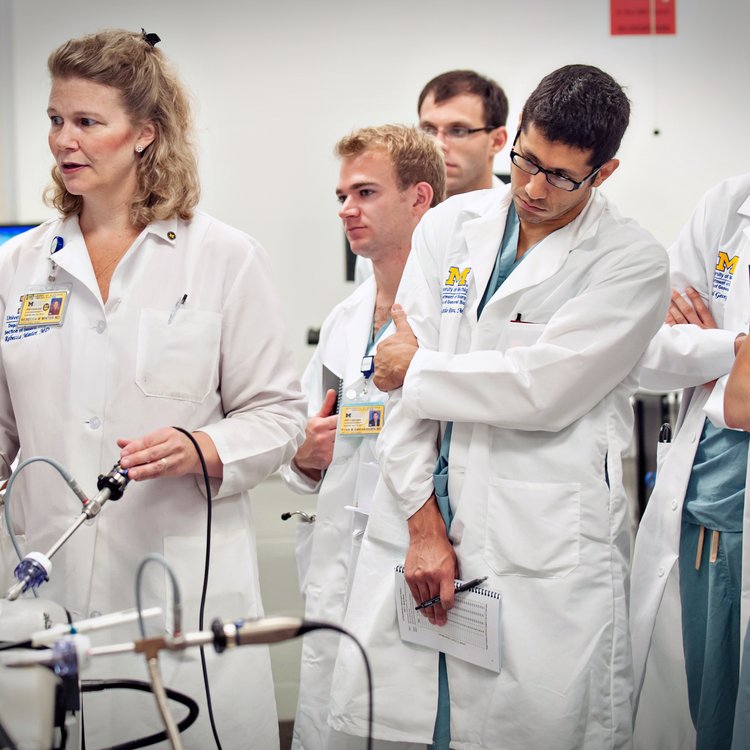
Instructional Methods in Health Professions Education

What You'll Learn

  • Understand educational theory as it relates to health professions education.
  • Learn a variety of applied teaching techniques.
  • Share successful teaching strategies.
7 Modules
21 Hours
3 hrs per module (approx.)
Rating

About Instructional Methods in Health Professions Education

This course provides those involved in educating members of the health professions an asynchronous, interdisciplinary, and interactive way to obtain, expand, and improve their teaching skills. These skills can then be applied within their own professional context, with a variety of learners, extending across many stages.

After completing this course, learners will:
1. Understand educational theory as it relates to health professions education
2. Match instructional methods with desired educational outcomes
3. Learn a variety of applied teaching techniques
4. Share successful teaching strategies

Suggested resources will include educational videos, individual readings, recommended
reference books, and crowd-sourced recommendations. All students should have
dependable access to the internet with video streaming capabilities. Some students
may want the ability to utilize on-line video conferencing as well.

Skills You'll Gain

  • Certified Health Education Specialist
  • Health Education
  • Ideation
  • Instructional Design
  • Instructional Strategies
  • Learning Theory
  • Teaching

What You'll Earn

Certificate of Completion:
Certificates of completion acknowledge knowledge acquired upon completion of a non-credit course or program.
Experience Type
100% Online
Format
Self-Paced
Subject
  • Science
Platform
Coursera
Welcome Message

Welcome to Instructional Methods in Health Professions Education, a course designed for educators across the health professions who want to strengthen their teaching practice. This course explores educational theory, instructional design, assessment, and applied teaching techniques that support effective learning across diverse contexts and career stages. You will gain practical strategies to align teaching methods with outcomes, enhance learner engagement, and share evidence-based approaches within your professional setting.

This abbreviated syllabus description was created with the help of AI tools and reviewed by staff. The full syllabus is available to those who enroll in the course.

Course Schedule

Module 1: Adult Learning Theory

  • Reading: Introduction
  • Reading: Syllabus
  • Discussion Prompt: Introduce Yourself
  • Reading: Help us learn more about you!
  • Reading: READ: Adult Learning Theory (Unit 01)
  • Video: 01.01 - Learning Styles and Motivation
  • Discussion Prompt: Discussion 01.01a
  • Discussion Prompt: Discussion 01.01b
  • Discussion Prompt: Discussion 01.01c
  • Discussion Prompt: Discussion 01.01d - Behaviorist
  • Discussion Prompt: Discussion 01.01d - Constructivist
  • Video: 01.02 - Metacognition
  • Discussion Prompt: Discussion 01.02a
  • Discussion Prompt: Discussion 01.02b
  • Video: 01.03 - Social Learning Theory
  • Discussion Prompt: Discussion 01.03a
  • Discussion Prompt: Discussion 01.03b
  • Discussion Prompt: Discussion 01.03c
  • Video: 01.04 - Professional Identity Formation
  • Reading: Want to plan your learning journey with Michigan Online?
  • Graded: Quiz 01.01 - Motivation and Learning
  • Graded: Quiz 01.04 - Reflective Judgment Quiz

Module 2: Intended Learning Outcomes

  • Reading: READ: Intended Learning Outcomes (Unit 02)
  • Video: 02.01 - Bloom's Taxonomy
  • Video: 02.02 - Miller's Pyramid: Clinical Competence
  • Video: 02.03 - Dreyfus Model: Skill Acquisition
  • Discussion Prompt: Discussion 02.03a
  • Discussion Prompt: Discussion 02.03b
  • Graded: Quiz 02.01: Learning Domains
  • Graded: 02.01 - Creating ILOs using Bloom's Taxonomy

Module 3: Instructional Design and Individual Assessment

  • Reading: READ: Instructional Design and Individual Assessment (Unit 03)
  • Video: 03.01 - Multiple-Choice Question Writing
  • Video: 03.02 - Skill Assessment
  • Video: 03.03 - Oral Presentations
  • Discussion Prompt: Discussion 03.03a
  • Video: 03.04 - Rubrics and Standardization
  • Reading: Stay in Touch on UM Online Courses
  • Graded: Quiz 03.01 - MCQ Quiz
  • Graded: Quiz 03.02 - Skills Assessment
  • Graded: Quiz 03.04 - Rubrics and Standardization

Module 4: Instructional Techniques: Knowledge Transfer

  • Reading: READ: Instructional Techniques: Knowledge Transfer (Unit 04)
  • Video: 04.01 - Active Learning in Large Lecture Formats
  • Video: 04.02 - Supportive Questioning
  • Discussion Prompt: Discussion 04.02a
  • Video: 04.03 - "Big Ticket" Technique
  • Graded: Quiz 04.02 - Supportive Questioning
  • Graded: Quiz 04.03 - "Big Ticket" Items

Module 5: Instructional Techniques: Skill Development

  • Reading: READ: Instructional Techniques: Skill Development (Unit 05)
  • Video: 05.01 - Simulation
  • Video: 05.02 - Teaching with Data
  • Discussion Prompt: Discussion 05.02a
  • Video: 05.03 - Clinical Reasoning
  • Graded: Quiz 05.01 Simulation
  • Graded: 05.01 Simulation
  • Graded: In-Video Quiz 05.02 NOAA Data

Module 6: Instructional Techniques: Attitudes

  • Reading: READ: Instructional Techniques: Attitudes (Unit 06)
  • Video: 06.01 - Reflection
  • Video: 06.02 - Feedback
  • Discussion Prompt: Discussion 06.02a
  • Video: 06.03 - Incorporating Art, Music, and Theater
  • Discussion Prompt: Discussion 06.03a
  • Graded: 06.01 - Reflection
  • Graded: Quiz 06.02 Feedback

Module 7: Instructional Techniques: Teaching With Technology

  • Reading: READ: Instructional Techniques: Teaching with Technology (Unit 07)
  • Video: 07.01 - Large Lecture Formats
  • Discussion Prompt: Discussion 07.01a
  • Video: 07.02 - Synchronous Vs. Asynchronous Formats
  • Discussion Prompt: Discussion 07.02a
  • Video: 07.03 - High Fidelity Clinical Simulations
  • Discussion Prompt: Discussion 07.03a
  • Reading: Post-course Survey
  • Reading: Keep Learning with Michigan Online
  • Graded: 07.01 Large Lecture Format
  • Graded: 07.03 High Fidelity Clinical Simulations
Grading Policy

Learners must complete all graded quizzes and peer-reviewed assignments to pass the course. Final grades are calculated based on weighted quizzes and applied assignments across modules. The module quizzes are worth approximately 50%, and the applied assignments and peer reviews (ILOs, Simulation, Reflection, Technology-focused assignments) are worth approximately 50%.

Course content developed by U-M faculty and managed by the university. Faculty titles and affiliations are updated periodically.

Intermediate Level

Some related experience required
Enrollment Options

Individuals

This experience is available to individual learners on the following platforms:

U-M Community

Students, faculty, staff, and alumni of the University of Michigan get free access.

Organizations

Special pricing and tailored programming bundles available for organizational partners.

What are Coursera and edX?

Michigan Online learning experiences may be hosted on one or more learning platforms. Platform features may vary, including payment models, social communities, and learner support.

Coursera

  • Hosts online courses, series, and Teach-Outs from Michigan Online
  • Enroll and preview courses anytime
  • May earn a non-credit certificate from Coursera

edX

  • Hosts online courses and series from Michigan Online
  • Many offer a free (limited) audit option
  • May earn a non-credit certificate from edX

For more information visit the What are Coursera and edX? FAQ section

Reviews and Ratings

4.7

467 Ratings from Coursera

Michigan Online
For You

Sign up for a Michigan Online account to customize your experience!