
Your browser is ancient!
Upgrade to a different browser to experience this site.
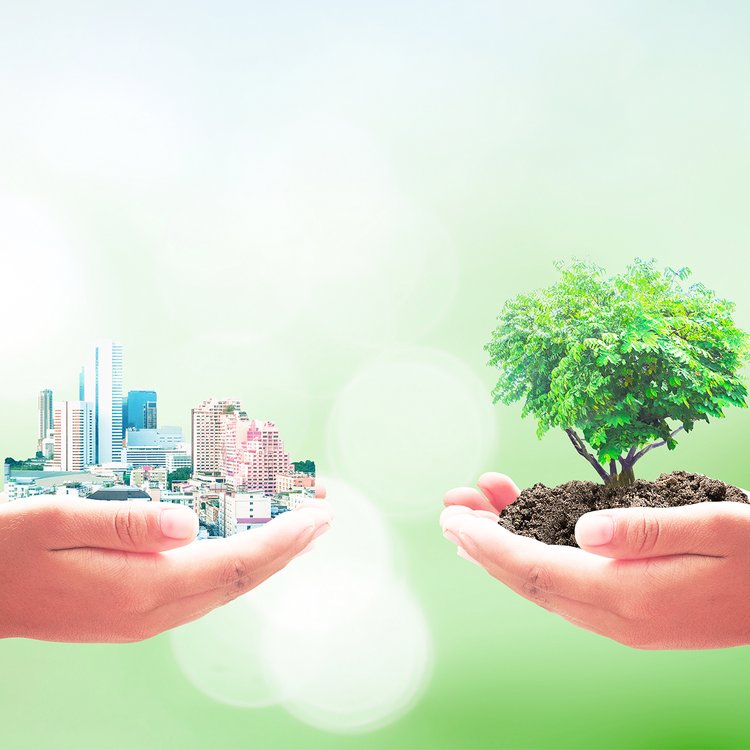
Environmental Health: the Foundation of Global Public Health

What You'll Learn

  • Explore environmental health policies that can be used to address and reduce the impacts of environmental health hazards.
  • Use systems thinking to understand and analyze environmental health issues.
4 Modules
20 Hours
5 hrs per module (approx.)
Rating

About Environmental Health: the Foundation of Global Public Health

The first course of the Impacts of the Environment on Global Public Health specialization will provide you with a foundation in environmental health sciences (EHS). We will explore four main topics. The first is an introduction to EHS and the exposure-disease model – a very useful framework for understanding the influence of the environment on human health. The second topic is key concepts in EHS and environmental health policies that can be used to address and reduce the impacts of environmental health hazards. The third topic is the application of systems thinking to understand and analyze environmental health issues. The fourth and final topic is occupational health, which is a key environment that represents a major source of morbidity and mortality from a public health perspective.

Skills You'll Gain

  • Environmental Health
  • Environmental Health Management
  • Population Health
  • Public Health

What You'll Earn

Certificate of Completion:
Certificates of completion acknowledge knowledge acquired upon completion of a non-credit course or program.
Experience Type
100% Online
Format
Self-Paced
Subject
  • Health
Platform
Coursera
Welcome Message

Welcome to Environmental Health: the Foundation of Global Public Health, an online course that introduces the core principles shaping how environmental factors influence population health worldwide. You will explore environmental health science, policy approaches, systems thinking, and occupational health using global and U.S. examples. This course, the first in the Impacts of the Environment on Global Public Health series, builds foundational knowledge to help you understand how environmental hazards are identified, evaluated, and addressed in public health practice.

This abbreviated syllabus description was created with the help of AI tools and reviewed by staff. The full syllabus is available to those who enroll in the course.

Course Schedule

Module 1: Introduction to Environmental Health Sciences

  • Video: Environmental Health: the Foundation of Global Public Health
  • Reading: Course Syllabus
  • Reading: Community Engagement
  • Discussion Prompt: Introduce Yourself
  • Reading: Help Us Learn More About You!
  • Graded Assignment: Exposure-Disease Framework Practice Quiz
  • Video: Introduction to Exposure-Disease Framework
  • Video: Introduction to Environmental Health
  • Video: Exposure-Disease Framework Details
  • Reading: Environmental Health Sciences in a Translational Research Framework
  • Video: Major Environmental Health Events
  • Reading: Environmental Health: Lessons from the Past and Looking to the Future
  • Video: Hazards and Exposures
  • Discussion Prompt: EHS in the News

Module 2: Environmental Health Policy

  • Video: Overview of Environmental Health Policy
  • Video: EHS Policy Process and Agencies
  • Reading: Is There a Role for Benefit-Cost Analysis in Environmental, Health, and Safety Regulation?
  • Video: Evaluating Policy Impacts on Health
  • Video: Example: Evaluating Policy Impacts on Motor Vehicle Safety
  • Reading: 1959 Chevrolet Bel Air vs. 2009 Chevrolet Malibu IIHS crash Test
  • Graded Assignment: Policy Impacts on Motor Vehicle Safety Practice Quiz
  • Reading: Evaluate Policy Impacts on Your State's Motor Vehicle Safety
  • Reading: Health Benefits of Air Pollution Reduction

Module 3: Exposure Pathways & Systems Thinking in Environmental Health

  • Video: Pathways and Routes of Exposure
  • Discussion Prompt: Pathways Example: Nanoparticles
  • Video: Assessing Exposures
  • Reading: Optional: Assignment 2 Instructions: Personal Exposure Pathway
  • App Item: Optional: Submit Assignment 2: Personal Exposure Pathway
  • Reading: The Application of Systems Thinking in Health: Why Use Systems Thinking?
  • Video: Introduction to Systems Thinking
  • Video: Approaches to Systems Thinking
  • Video: Example: Applying Systems Thinking to EHS Hazards
  • Video: Toxic Release Inventory (TR) Assignment

Module 4: Occupational Health

  • Reading: An Approach to Assess the Burden of Work-Related Injury, Disease, and Distress
  • Video: Introduction to Occupational Health
  • Video: Occupational Health Hazards
  • Video: Occupational Health Outcomes
  • Graded Assignment: Why Underreporting Practice Quiz
  • Video: Agencies Focused on Occupational Health
  • Video: Controlling Occupational Hazards
  • Graded Assignment: Identifying Occupational Hazard Control Practice Quiz
  • Video: Recap on Environmental Health: the Foundation of Global Public Health
  • Reading: Post-Course Survey
Grading Policy

Course materials and assignments are available for self-paced learning. Learners must earn an overall grade of 80% or higher to pass the course and receive a certificate. The course grade is based on three quizzes worth 60% (20% each), and a peer-graded assignment worth 40%.

Portrait of Richard Neitzel
Richard Neitzel

Associate Professor, Environmental Health Sciences; Associate Director, Global Public Health; Professor, Global Public Health

Course content developed by U-M faculty and managed by the university. Faculty titles and affiliations are updated periodically.

Beginner Level

No prior experience required

Enrollment Options

Individuals

This experience is available to individual learners on the following platforms:

U-M Community

Students, faculty, staff, and alumni of the University of Michigan get free access.

Organizations

Special pricing and tailored programming bundles available for organizational partners.

What are Coursera and edX?

Michigan Online learning experiences may be hosted on one or more learning platforms. Platform features may vary, including payment models, social communities, and learner support.

Coursera

  • Hosts online courses, series, and Teach-Outs from Michigan Online
  • Enroll and preview courses anytime
  • May earn a non-credit certificate from Coursera

edX

  • Hosts online courses and series from Michigan Online
  • Many offer a free (limited) audit option
  • May earn a non-credit certificate from edX

For more information visit the What are Coursera and edX? FAQ section

Reviews and Ratings

4.6

95 Ratings from Coursera

Michigan Online
For You

Sign up for a Michigan Online account to customize your experience!