
Associate Professor
Your browser is ancient!
Upgrade to a different browser to experience this site.
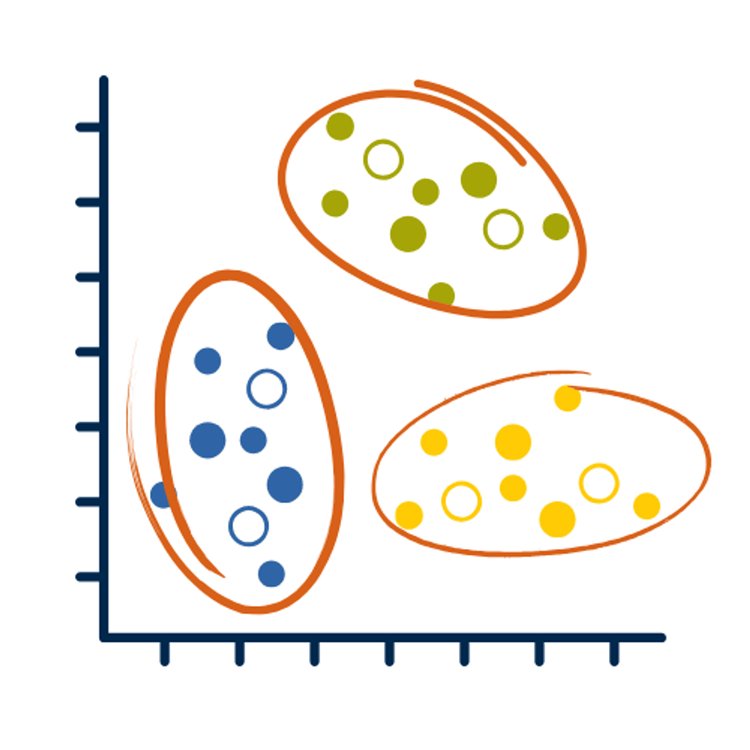
In “Applied Unsupervised Learning in Python,” you will learn how to use algorithms to find interesting structure in datasets. You will practice applying, interpreting, and refining unsupervised machine learning models to solve a diverse set of problems on real-world datasets.
This course will show you how to explore unlabelled data using several techniques: dimensionality reduction and manifold learning for condensing and visualizing high-dimensional data, clustering to reveal interesting groups and outliers, topic modeling for summarizing important themes in text, methods for dealing with missing data, and more. This course also covers best practices associated with different techniques, as well as demonstrating how unsupervised learning can be used to improve supervised prediction.
This is the second course in “More Applied Data Science with Python,” a four-course series focused on helping you apply advanced data science techniques using Python. It is recommended that all learners complete the Applied Data Science with Python specialization prior to beginning this course.
Applied Unsupervised Learning in Python focuses on discovering structure in unlabeled data using practical, real-world applications. You will learn how to apply, evaluate, and refine unsupervised learning techniques such as dimensionality reduction, clustering, and topic modeling. The course emphasizes interpretation and iterative improvement of models rather than theoretical derivations.
This abbreviated syllabus description was created with the help of AI tools and reviewed by staff. The full syllabus is available to those who enroll in the course.
Module 1: Basic Unsupervised Learning Methods
Module 2: Clustering
Module 3: Unsupervised Methods for Text Analysis
Module 4: Applications and Variants of Unsupervised Learning
There are a series of module quizzes and programming assignments in this course. The quizzes for each module account for between 5-7% of your final grade. The programming assignments are worth between 18-20% of your final grade.
Associate Professor
Course content developed by U-M faculty and managed by the university. Faculty titles and affiliations are updated periodically.
Advanced Level
A basic understanding of statistics and linear algebra, and completing the “Applied Data Science with Python” series, is recommended.