Associate Chief of Staff for Education, Ann Arbor Veterans Affairs Healthcare System and Professor of Internal Medicine and Learning Health Sciences
Your browser is ancient!
Upgrade to a different browser to experience this site.
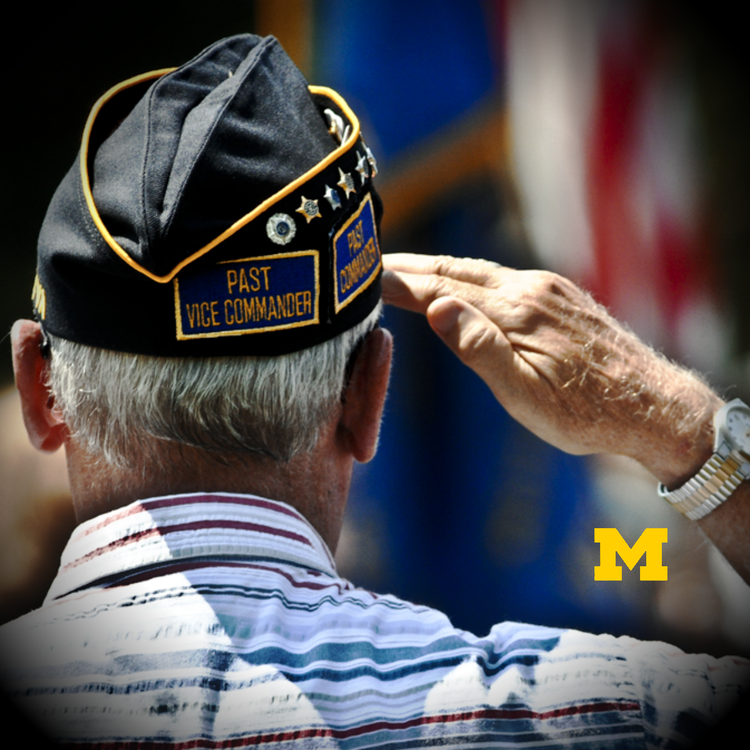
Improving health care for veterans has become a matter of national attention and has gained increasing attention from the medical community. With the current surge of veterans reintegrating into civilian society it is critical to improve the training of the next cadre of providers who will provide care for our veterans. It is widely known that veterans receive care in all aspects of the health system, thus providers in veteran focused care facilities, military health serves and civilian locals must be aware of the unique needs of veterans. It is perhaps even more important to educate civilian providers who may be unfamiliar with the unique physical, mental and emotional needs related to military service.
Course Audience
- all health professions learners, example:
- medical students, resident physicians, dental students,
- nursing students, advanced practice nurses,
- social work, pharmacy student as graduate level learners
- as well as any and all health professionals interested in veteran-centered care
What You Will Learn:
This course will provide learners the opportunity to engage with material to facilitate their understanding of the origins of Academic Medical Centers and Veterans Administration affiliations, recognize and manage the influence of bias, class, and power on the clinical encounter and self-reflect on their biases that particularly affect U.S. military veterans. This course also features several video clips from the acclaimed documentary, Where Soldiers Come From, directed by Heather Courtney.
The views expressed in this course are those of the authors and do not necessarily reflect the position or the policy of the Department of Veterans Affairs or the U.S. government.
Welcome to Service Transformed: Lessons in U.S. Veteran Centered Care, a course for health professionals examining the unique healthcare needs of U.S. military veterans. You will explore how military service shapes physical, mental, and emotional health; the origins of important institutions to veteran healthcare; and how bias, power, and social context influence clinical care. Through case-based learning and reflection, this course supports more informed, compassionate, and veteran-centered healthcare practice.
This abbreviated syllabus description was created with the help of AI tools and reviewed by staff. The full syllabus is available to those who enroll in the course.
Module 1
Module 2
Module 3
Module 4
Module 5
Module 6
Module 7
Learners are assessed through case-based assignments, peer reviews, and content quizzes. To pass the course, learners must complete all required graded activities. The course grade is based on 12 module case assignments and peer reviews (5% each) for 60% of the total grade, modules 1-6 content quizzes (5% each) for 30%, and the module 7 content quiz worth 10%.
Associate Chief of Staff for Education, Ann Arbor Veterans Affairs Healthcare System and Professor of Internal Medicine and Learning Health Sciences
Director, Advancing Scholarship and Medical Sociologist
Course content developed by U-M faculty and managed by the university. Faculty titles and affiliations are updated periodically.
Intermediate Level
Some related experience required