
Your browser is ancient!
Upgrade to a different browser to experience this site.
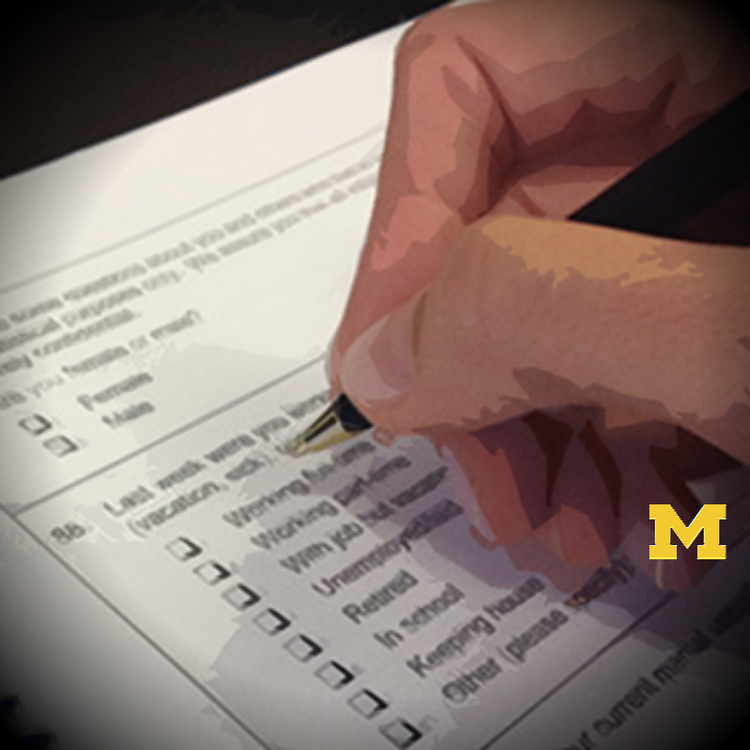
Questionnaire Design for Social Surveys

What You'll Learn

  • Understand the basic elements of designing and evaluating questionnaires
6 Modules
18 Hours
3 hrs per module (approx.)
Rating

About Questionnaire Design for Social Surveys

This course will cover the basic elements of designing and evaluating questionnaires. We will review the process of responding to questions, challenges and options for asking questions about behavioral frequencies, practical techniques for evaluating questions, mode specific questionnaire characteristics, and review methods of standardized and conversational interviewing.

Skills You'll Gain

  • Questionnaire Design
  • Sample Surveys
  • Stratified Sampling
  • Survey Sampling

What You'll Earn

Certificate of Completion:
Certificates of completion acknowledge knowledge acquired upon completion of a non-credit course or program.
Experience Type
100% Online
Format
Self-Paced
Subject
  • Business
  • Social Sciences
Platform
Coursera
Welcome Message

Welcome to Questionnaire Design for Social Surveys, a course focused on creating effective survey instruments. Learners examine question design, response behavior, interviewing techniques, and evaluation strategies.
This abbreviated syllabus description was created with the help of AI tools and reviewed by staff. The full syllabus is available to those who enroll in the course.

Course Schedule

Module 1: Overview of Standardized Interviewing

  • Video: Introduction
  • Reading: Slides Introduction
  • Reading: Syllabus
  • Reading: Help us learn more about you!
  • Reading: Reading Assignments
  • Reading: Course Project and Peer Assessment
  • Reading: Grading and Certification
  • Reading: FAQs
  • Reading: References/Resources
  • Reading: Announcement Unit 1
  • Video: Types of Questions
  • Video: Measurement Error: Bias and Variance
  • Video: Standardized Interviewing
  • Video: Conversational Interviewing
  • Video: Concept Specification
  • Reading: Slides Unit 1
  • Graded: Quiz #1

Module 2: Response Process

  • Reading: Announcement Unit 2
  • Video: Response Process: Comprehension
  • Video: Response Process: Retrieval
  • Video: Response Process: Judgment
  • Video: Response Process: Response
  • Reading: Slides Unit 2
  • Graded: Quiz #2
  • Graded: Course Project

Module 3: Asking Factual Questions

  • Reading: Announcement Unit 3
  • Video: Facts and Quasi Facts
  • Video: Memory and Recall: Reporting Behavioral Frequencies
  • Video: Memory and Recall: Length of Reference Period
  • Video: Memory and Recall: Comprehension and Retrieval
  • Video: Asking Sensitive Questions
  • Video: Asking Sensitive Questions: Techniques
  • Video: Asking Sensitive Questions: Indirect Techniques
  • Video: Mode, Privacy, and Confidentiality
  • Reading: Slides Unit 3
  • Graded: Quiz #3

Module 4: Measuring Attitudes

  • Reading: Announcement Unit 4
  • Video: Attitude Questions: Attitudes
  • Video: Attitude Questions: Context Effects
  • Video: Attitude Questions: Specific vs. General Evaluations
  • Video: Attitude Questions; Agree Disagree Scales
  • Video: Attitude Questions: Don't Know
  • Video: Attitude Questions: Order Effects
  • Video: All Questions: Response Options and Scales
  • Reading: Slides Unit 4
  • Graded: Quiz #4

Module 5: Testing Questionnaires

  • Reading: Announcement Unit 5
  • Video: Pretesting Techniques: Expert Reviews and Focus Groups
  • Video: Pretesting Techniques: Cognitive Interviews
  • Video: Behavior Coding
  • Video: Pretesting Techniques: Quantitative Techniques
  • Video: Pretesting Techniques - Other Techniques
  • Reading: Slides Unit 5
  • Graded: Quiz #5

Module 6: Putting It All Together

  • Reading: Announcement Unit 6
  • Video: From Start to Finish: Putting Questions into a Questionnaire
  • Video: Motivated Underreporting: Reports from Selected Research Studies
  • Video: Main Questionnaire: Demographic Questions - Ending
  • Video: Mode Choice: Implications for Layout
  • Video: Self-Administered Questionnaires: Additional Requirements
  • Video: Summary: Unit by Unit Take-Home Points
  • Reading: Slides Unit 6
  • Graded: Final Exam
Grading Policy

Learners must earn an overall passing grade. Assessments in the first five modules are each worth 15% of your final grade. The Final Exam is worth 25% of your final grade.

Course content developed by U-M faculty and managed by the university. Faculty titles and affiliations are updated periodically.

Intermediate Level

Some related experience required

Enrollment Options

Individuals

This experience is available to individual learners on the following platforms:

U-M Community

Students, faculty, staff, and alumni of the University of Michigan get free access.

Organizations

Special pricing and tailored programming bundles available for organizational partners.

What are Coursera and edX?

Michigan Online learning experiences may be hosted on one or more learning platforms. Platform features may vary, including payment models, social communities, and learner support.

Coursera

  • Hosts online courses, series, and Teach-Outs from Michigan Online
  • Enroll and preview courses anytime
  • May earn a non-credit certificate from Coursera

edX

  • Hosts online courses and series from Michigan Online
  • Many offer a free (limited) audit option
  • May earn a non-credit certificate from edX

For more information visit the What are Coursera and edX? FAQ section

Reviews and Ratings

4.5

429 Ratings from Coursera

Michigan Online
For You

Sign up for a Michigan Online account to customize your experience!