
Your browser is ancient!
Upgrade to a different browser to experience this site.
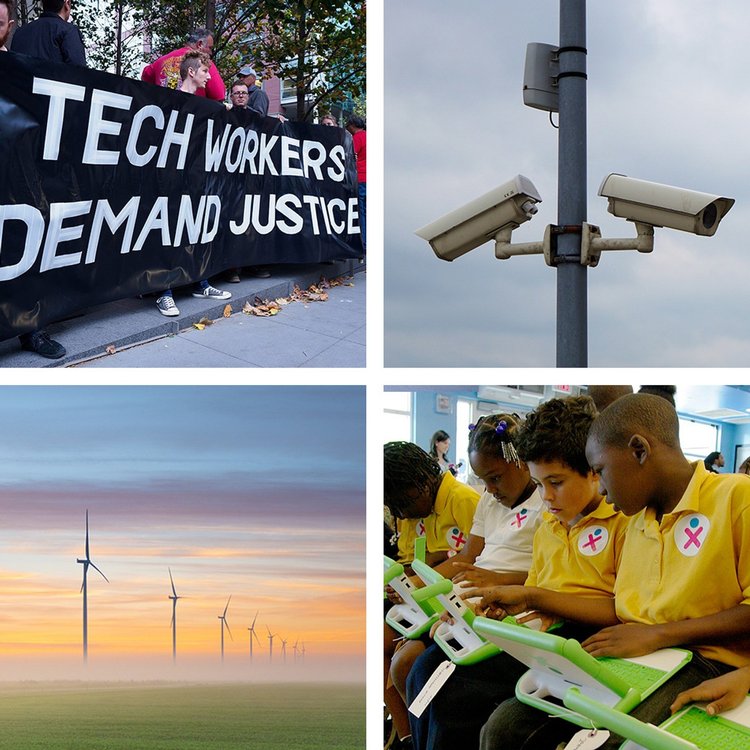
Justice and Equity in Technology Policy

What You'll Learn

  • Become familiar with the landscape of technology policymaking.
  • Understand how inequity and injustice can become embedded in technology, science, and associated policies.
  • Understand the power and limitations of technology in solving social problems.
6 Modules
36 Hours
6 hrs per module (approx.)
Rating

About Justice and Equity in Technology Policy

More than ever, technology is shaping, and being shaped by, public policy. This has an enormous impact, particularly for marginalized communities. The artificial intelligence and computer algorithms increasingly driving government and industry decisions—from the allocation of social services to hiring—are reflecting and reinforcing social biases towards women, people of color, and disabled people, among others. Global climate change is having a disproportionately negative impact on low- and middle-income countries, and on historically disadvantaged communities of color in the United States. Communities are increasingly concerned they are not benefiting from government research funding, and that the regulation of emerging technologies is inadequate.

The interconnectedness of technology, policy, and equality raises crucial questions for scientists, technologists, and leaders in public policy, civil society, and industry. How can technology be built, implemented, and governed more equitably? How can the concerns of marginalized communities be integrated better into technology and related policies? How should community knowledge and concerns be integrated with technical expertise and scientific evidence in the development of public policies?

This course aims to help learners understand how inequity and injustice can become embedded in technology, science, and associated policies, and how this can be addressed.

Combining real-world cases with scholarly insights, this course introduces learners to these challenges and offers tools for navigating them. You will learn about:
- The landscape of technology policymaking
- How technology, and related policies both reflect and reinforce social values, biases and politics
- The power and limitations of technology in solving social problems
- New ways to think about “experts” and “publics”
- The politics of innovation policy

The course is designed for people from diverse professional, advocacy, and academic backgrounds. No scientific, technical, or policy background is necessary.

Skills You'll Gain

  • Social Justice
  • Technology Strategies

What You'll Earn

Certificate of Completion:
Certificates of completion acknowledge knowledge acquired upon completion of a non-credit course or program.
Experience Type
100% Online
Format
Self-Paced
Subject
  • Social Sciences
  • Technology
Platform
Coursera
Welcome Message

Welcome to Justice and Equity in Technology Policy, a course that centers justice and equity in the development and governance of technology and science policy. You will explore how social values, biases, and political priorities shape technologies and their regulation, and how inequities can become embedded in design and policy. Through real-world cases and interdisciplinary perspectives, you’ll gain tools to critically evaluate technology’s role in society and imagine more equitable policy approaches.

This abbreviated syllabus description was created with the help of AI tools and reviewed by staff. The full syllabus is available to those who enroll in the course.

Course Schedule

Module 1: How Do Values Shape Technology?

  • Reading: Welcome & Meet your Instructor
  • Reading: Course Syllabus
  • Reading: Course Pre-Survey
  • Discussion Prompt: Introduce Yourself
  • Video: Introduction to Equity and Justice in Technology Policy
  • Video: How do Values Shape Technology?
  • Reading: Tips for Reading Academic Articles
  • Reading: Do Artifacts Have Politics?
  • Reading: Assessing the social impact of direct-to-consumer genetic testing: Understanding sociotechnical architectures
  • Reading: Science in Abortion Politics and the Failure of One Laptop Per Child ft. Morgan Ames
  • Reading: The Ethics of Invention
  • Reading: Algorithmic Colonization of Africa
  • Reading: The UN is holding a summit on building a sustainable future for food and ag. Why are so many people upset about it?
  • Reading: Explainer: what is surveillance capitalism and how does it shape our economy?
  • Reading: What is Surveillance Capitalism?
  • Reading: Surveillance capitalism in the age of Covid-19
  • Discussion Prompt: Week 1 Writing Assignment

Module 2: Technology & Equity

  • Video: Connecting Technology and Equity
  • Reading: Marginalized Aadhaar: How the World’s Largest Digital Identification Programme Led to the Exclusion of Marginalized Communities
  • Reading: How a Popular Medical Device Encodes Racial Bias
  • Reading: Oximeters Used to Be Designed for Equity. What Happened?
  • Discussion Prompt: How have different values, biases and assumptions shaped technology?
  • Reading: Facial Recognition, Algorithmic Inequality, and a Racial Reckoning ft. Virginia Eubanks
  • Reading: An algorithm that screens for child neglect raises concerns
  • Reading: San Francisco Rations Housing by Scoring Homeless People’s Trauma. By Design, Most Fail to Qualify.
  • Reading: Why it’s so damn hard to make AI fair and unbiased?
  • Reading: South Africa’s private surveillance machine is fueling a digital apartheid
  • Reading: Luxury Surveillance
  • Reading: When an Algorithm Gets It Wrong
  • Reading: Optional: Big Tech Entrenches US Power with Michael Kwet
  • Discussion Prompt: Week 2 Reflection

Module 3: Technology Policy & Equity

  • Video: Understanding Innovation Policy
  • Reading: How State Funding Built Silicon Valley with Margaret O’Mara
  • Reading: Innovation Policy, Structural Inequality, and COVID-19
  • Graded Assignment: Social Values and Political Priorities Shape Policy Quiz
  • Reading: Private Patents, Public Health
  • Reading: Overpatented, Overpriced
  • Graded Assignment: Institutions and Patents Quiz
  • Reading: The Practices of Objectivity in Regulatory Science
  • Reading: Why does the state allow environmental inequalities to persist?
  • Graded Assignment: Science and Technology Policy and Equity Quiz
  • Video: Understanding Regulatory Policy
  • Reading: Saving Science, The New Atlantis
  • Reading: The Return of Biological Race? Regulating Race and Genetics Through Administrative Agency Race Impact Assessments
  • Reading: Optional: Racism is baked into patent systems
  • Discussion Prompt: Week 3 Reflection

Module 4: Rethinking Expertise

  • Video: Rethinking Expertise
  • Reading: Misunderstood misunderstanding: social identities and public uptake of science
  • Reading: ACT-UP: A History of HIV/AIDS Activism
  • Reading: How and Why Patients Made Long Covid
  • Reading: ‘We Do Not Want Fake Energy’: The Social Shaping of a Solar Micro-grid in Rural India
  • Discussion Prompt: Experiential Expertise Discussion
  • Video: Valuing Non-Traditional Expertise in Technology Policy
  • Reading: A global observatory for gene editing
  • Reading: Integrating Public Deliberation into Engineering Systems: Participatory Technology Assessment of NASA's Asteroid Redirect Mission

Module 5: Rethinking Design

  • Video: Considering Equity Upstream
  • Reading: What is Design for Social Justice?
  • Reading: Rethinking Success and Failure in Community-Oriented Engineering
  • Discussion Prompt: Rethinking Design Discussion
  • Video: Rethinking Design for Equity and Justice
  • Reading: Designing Accessible Fashion for People with Disabilities
  • Reading: Assessing Watershed Scarcity and Watershed Development in Maharashtra, India: A Case Study of the Baliraja Memorial Dam
  • Reading: Rooted in Recognition: Indigenous Environmental Justice and the Genetically Engineered Chestnut Tree
  • Reading: NASEM Fostering Responsible Computing Research--Foundations and Practices
  • Reading: Developing a Framework for Responsible Innovation
  • Reading: [Optional] Case Study: China
  • Reading: [Optional] Power to the People? Opportunities and Challenges for Participatory AI
  • Discussion Prompt: Framework for Responsible Innovation Reflection

Module 6: Rethinking Policy and Governance

  • Video: Rethinking Technology Policy For Equity
  • Reading: [Optional] Innovation as a Force for Equity
  • Reading: Industrial Policy's Comeback
  • Reading: Mariana Mazzucato and Raghuram Rajan on Building Back Post-Pandemic
  • Reading: [Optional] Maximizing Good Innovation
  • Reading: Examining the Black Box: Tools for Assessing Algorithmic Systems
  • Reading: The Citizens' Biometrics Council
  • Reading: What's in the Chatterbox?
  • Discussion Prompt: Multiple Perspectives Activity
  • Discussion Prompt: Share what's next for you!
  • Reading: Course Post-Survey
  • Reading: Continue learning from the Ford School of Public Policy and the Science, Technology, and Public Policy Program
Grading Policy

Course materials and assessments are self-paced and remain open throughout the course. Learners must earn an overall grade of 80% to pass and receive a certificate. Module review quizzes are worth 70% of your total grade and graded assignments are worth 30% of your grade.

Course content developed by U-M faculty and managed by the university. Faculty titles and affiliations are updated periodically.

Beginner Level

No prior experience required

Enrollment Options

Individuals

This experience is available to individual learners on the following platforms:

U-M Community

Students, faculty, staff, and alumni of the University of Michigan get free access.

Organizations

Special pricing and tailored programming bundles available for organizational partners.

What are Coursera and edX?

Michigan Online learning experiences may be hosted on one or more learning platforms. Platform features may vary, including payment models, social communities, and learner support.

Coursera

  • Hosts online courses, series, and Teach-Outs from Michigan Online
  • Enroll and preview courses anytime
  • May earn a non-credit certificate from Coursera

edX

  • Hosts online courses and series from Michigan Online
  • Many offer a free (limited) audit option
  • May earn a non-credit certificate from edX

For more information visit the What are Coursera and edX? FAQ section

Reviews and Ratings

4.9

15 Ratings from Coursera

Michigan Online
For You

Sign up for a Michigan Online account to customize your experience!