Recognize the importance and applications of 3D printing with metals in engineering, industrial contexts, and art and design
Articulate how 3D printing with metals differs from 3D printing with plastics
Explain five different families of processes used to 3D print with metals
Determine which 3D printing method is suited for your project
5 Modules
15 Hours
3 hrs per module (approx.)
Rating
About Introduction to 3D Printing with Metals
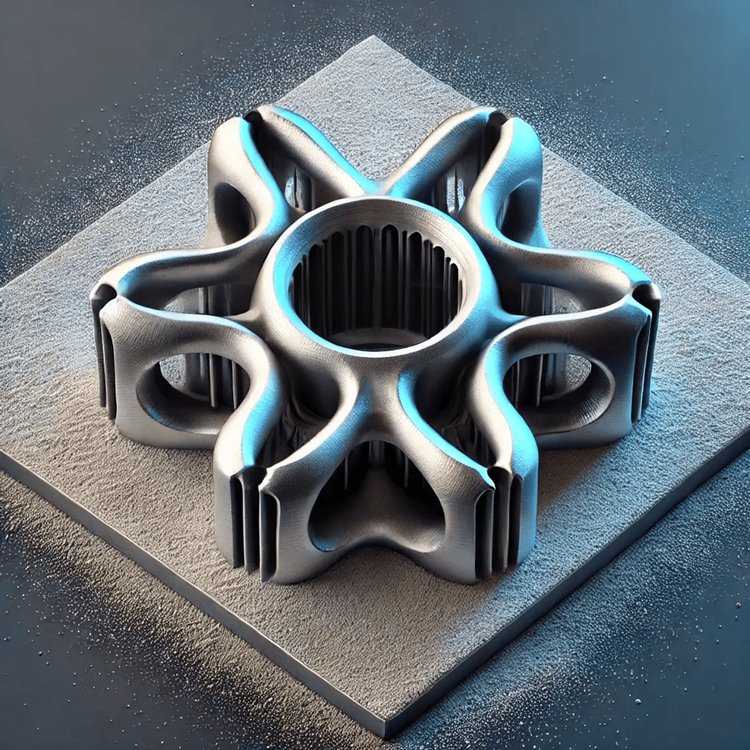
3D printing with metals is revolutionizing manufacturing, engineering, and artistry. In “Introduction to 3D Printing with Metals,” you’ll learn about the essential elements of the technology, and how it can be applied to a range of use cases.
Designed for broad relevance to professionals, hobbyists, and students alike, the course provides essential information about methods of printing using metals, how they work, their advantages and limitations, and most importantly, their practical applications. From basic, desktop forms of 3D printing with metals to more complex processes, like powder bed fusion and jetting-based projects, you will learn about 3D metal printing through examples and interviews with industry experts. You’ll also gain hands-on experience with 3D printing within a smartphone or desktop-accessible augmented reality experience. The content presented in this course draws on a number of interviews with industry experts and was created through a partnership with Siemens.
With this course, you’ll gain a broad understanding of how 3D printing with metals can help you realize your creative vision or enhance your career.
Skills You'll Gain
3D Modeling Software
Additive Manufacturing
Advanced Manufacturing
What You'll Earn
Certificate of Completion:
Certificates of completion acknowledge knowledge acquired upon completion of a non-credit course or program.
Experience Type
100% Online
Format
Self-Paced
Subject
Science
Technology
Platform
Coursera
Welcome Message
Welcome to Introduction to 3D Printing with Metals, a course that introduces the processes, opportunities, and challenges of metal additive manufacturing. You will explore why metal 3D printing differs from desktop plastic printing, learn about major industrial metal printing technologies, and examine issues of access, equity, and inclusion in this field. The course builds foundational knowledge to help you engage confidently with metal 3D printing technologies and applications.
This abbreviated syllabus description was created with the help of AI tools and reviewed by staff. The full syllabus is available to those who enroll in the course.
Course Schedule
Module 1: Why 3D Print with Metals?
Video: Welcome to the Course
Reading: Course Syllabus
Reading: Get to Know Your Instructors
Discussion Prompt: Meet Your Fellow Learners
Reading: Help Us Learn About You
Video: Enhancing Your Learning with Augmented Reality
Video: Why 3D Print with Metals?
Video: How to Desktop 3D Print with Metals?
Graded Assignment: Knowledge Check: Overview of Desktop 3D Printing with Metals
Video: The Benefits of Desktop 3D Printing with Metals
Video: The Limitations of Desktop 3D Printing with Metals
Discussion Prompt: What Can You Make with Desktop 3D Printing with Metals in Your Context?
Video: Industry Expert Perspective on What You Can Make with Desktop 3D Printing with Metals (Optional)
Reading: Interactive Experience: End-of-Arm Tool
App Item: Interactive Experience: End-of-Arm Tool
Reading: Post-Experience Survey Opportunity
Graded Assignment: Knowledge Check: Desktop 3D Printing with Metals: Possibilities & Limitations
Video: Moving Beyond Desktop 3D Printing—The Possibilities
Discussion Prompt: Tell us, What Do You Think?
Reading: Module 1 Optional Readings & Resources
Video: 3D Printing with Metals Now and in the Future (Optional)
Graded: Module 1 Quiz: Why 3D Print with Metals?
Module 2: Directed Energy Deposition (DED)
Video: What is Wire-Fed DED and How Does it Work?
Video: Advantages and Applications of Wire-Fed DED
Video: Welcome to RAPID+TCT
Video: What Parts Can Be Made with Wire-Fed DED? An Interview with MELTIO (Optional)
Video: What Parts Can Be Made with Wire-Fed DED? An Interview with LINCOLN ELECTRIC (Optional)
Discussion Prompt: What Can You Make with Wire-Fed DED In Your Context?
Video: Limitations of the Wire-Fed DED Process
Graded Assignment: Knowledge Check: Wire-Fed Directed Energy Deposition
Video: What is Powder-Fed DED and How Does it Work?
Video: Advantages and Applications of Powder-Fed DED
Video: What Parts Can Be Made with Powder-Fed DED? An Interview with DMG MORI (Optional)
Reading: What Can you Make with Powder-Fed DED?
Video: Limitations of the Powder-Fed DED Process
Graded Assignment: Knowledge Check: Powder-Fed Directed Energy Deposition
Video: What is Cold Spray and How Does it Work?
Video: Advantages and Applications of Cold Spray
Reading: Interactive Experience: Prop Housing
App Item: Interactive Experience: Prop Housing
Reading: Post-Experience Survey Opportunity
Video: What Parts Can Be Made with Cold Spray? An Interview with SPEED 3D (Optional)
Reading: Powder-Fed Directed Energy Deposition: Hot vs. Cold
Video: Limitations of the Cold Spray Process
Discussion Prompt: Tell us, What Do You Think?
Reading: Module 2 Optional Readings & Resources
Graded: Module 2 Quiz: Directed Energy Deposition (DED)
Module 3: Powder Bed Fusion (PBF)
Video: What is L-PBF and How Does it Work?
Video: Advantages and Applications of L-PBF
Video: What Parts Can Be Made with L-PBF? An Interview with EOS (Optional)
Video: What is Ultrasonic Lamination and How Does it Work?
Video: Advantages and Applications of Ultrasonic Lamination
Video: What Parts Can Be Made with Ultrasonic Lamination? An Interview with Fabrisonic (Optional)
Reading: What Can You Make with Lamination-Based Methods?
Video: Limitations of the Ultrasonic Lamination Process
Discussion Prompt: Tell us, What Do You Think?
Reading: Module 5 Optional Readings & Resources
Video: Course Wrap-Up
Reading: Learning More About 3D Printing with Metals
Reading: Post-Course Survey
Graded: Module 5 Quiz: Lamination-Based Processes
Grading Policy
Course materials and assessments are self-paced and remain open throughout the course. There are five quizzes in this course, each worth 20% of your grade. Learners must earn an overall grade of 80% to pass and receive a certificate.
Course content developed by U-M faculty and managed by the university.
Faculty titles and affiliations are updated periodically.
Beginner Level
No prior experience required

Course Video
Enrollment Options
Individuals
This experience is available to individual learners on the following platforms:
U-M Community
Students, faculty, staff, and alumni of the University of Michigan get free access.
Organizations
Special pricing and tailored programming bundles available for organizational partners.
Reviews and Ratings
4.9
9 Ratings from Coursera
What Learners Are Saying
We really want this journey to be rewarding for you, so you will not only be hearing from [your instructors], you will also be learning from top leaders in the field who will come and share their expertise about 3D printing with metals.
Chinedum OkwudireProfessor, Michigan Engineering
Michigan Online For You
Sign up for a Michigan Online account to customize your experience!