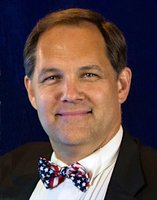
Executive Director, Office of Strategy and Academic Innovation
Your browser is ancient!
Upgrade to a different browser to experience this site.

This course has been designed to help leaders, like you, learn how to effectively navigate the challenges of significant organizational disruptions. As a participant in this course, you’ll discover why an understanding of various stakeholder perspectives can inform and dramatically improve a leader’s response to events that threaten an organization’s very survival. This course is also about understanding and developing individual and organizational resilience—the ability to anticipate potential threats; to cope effectively with adverse events when they occur; and to adapt to changing conditions, ensuring a viable path forward for yourself, your team, and your organization. These topics are particularly relevant in the wake of the global COVID-19 pandemic. Many course examples will reference lessons leaders around the world have learned during this far-reaching healthcare crisis.
During the eight course modules, which are distributed over four weeks, participants will explore topics such as: Why the VUCA world is making crises more common; Characteristics of resilient organizations and ways to increase resilience; Stakeholder value propositions and how these are threatened during a crisis; Organizing frameworks for estimating the types of crises an organization might encounter; the Unique and challenging nature of the crisis environment; the Fundamentals of crisis leadership; and Building a plan to prepare yourself, your team, and your organization for your next major crisis—which, in today’s world, is not so much an “if”, as a “when”.
Professor Mike Barger, your faculty member for this course, has served as a TOPGUN instructor in the United States Navy and as a founder and executive at JetBlue Airways. His professional experience has helped him learn a great deal about crisis leadership and to gain a true sense of what it means to be resilient. Throughout the course, Professor Barger will draw upon many practical examples that will make the content of this course easy to appreciate, understand, and translate into practical lessons that you will be able to apply immediately at your organization.
Crisis leadership is a topic that’s exciting, daunting, and almost impossible to master. With some time and effort over the four weeks of the course, however, you can develop an exceptional set of crisis-leadership tools that will serve you well throughout your professional career.
High Stakes Leadership: Leading in Times of Crisis prepares leaders to navigate uncertainty, complexity, and disruption. Grounded in real-world research and crisis scenarios, the course focuses on stakeholder expectations, trust, resilience, and decision-making under pressure. Learners develop practical leadership skills for high-consequence environments.
This abbreviated syllabus description was created with the help of AI tools and reviewed by staff. The full syllabus is available to those who enroll in the course.
Module 1: Modules 1&2: Course Introduction and Our VUCA Environment Demands a Focus on Stakeholders
Module 2: Modules 3&4: Developing Resilience and Understanding Stakeholder Reactions to Crises
Module 3: Modules 5&6: Crisis Varieties, Responses, and the Unique Nature of the Crisis Environment
Module 4: Modules 7&8: Crisis Leadership and Preparing for Future Crises
Learners must pass all graded knowledge validation assessments to complete the course. Five graded assignments come at the end of modules 2, 3, 4, 6, and 8, and are worth 20% each. Combined these five assessments determine 100% of the final grade.
Executive Director, Office of Strategy and Academic Innovation
Course content developed by U-M faculty and managed by the university. Faculty titles and affiliations are updated periodically.
Intermediate Level
Some related experience required
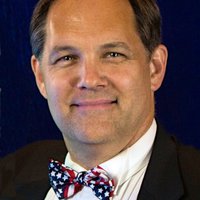
In a crisis, people – all of your stakeholders – will look to high stakes leaders, like you, for tangible evidence of leadership. When they look, they want and need leaders that they can believe in. They won’t expect you to be perfect or omniscient, but they will expec…
Mike Barger, EdD Professor of Business Administration and Executive Director of the Office of Strategy and Academic Innovation at the Stephen M. Ross School of Business

In this ever-changing world, courses like "High Stakes Leadership: Leading in Times of Crisis," and "Leading Diverse Teams & Organizations," enlightened me with holistic knowledge and tools through which I will strengthen the foundations of my personal growth and skill…
Christina I. Iliou Learner in Greece