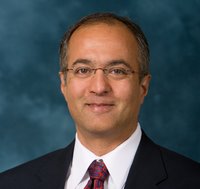
Edgar F Codd Distinguished University Professor and Bernard A Galler Collegiate Professor of Elec. Eng. and Computer Science
Your browser is ancient!
Upgrade to a different browser to experience this site.

"Data Science Ethics" is a beginner-friendly online course that examines the ethical responsibilities involved in collecting, analyzing, sharing, and using data. You will learn a practical framework for evaluating data-driven decisions and considering their effects on individuals, organizations, and society.
The course explores informed consent, data ownership, privacy, anonymity, data validity, algorithmic bias and fairness, surveillance, predictive policing, and facial recognition. Through real-world case studies, you will examine how choices about data and algorithms can produce unintended consequences—even when the analysis appears technically correct.
You will also examine how ethical principles can inform professional standards and evaluate codes of ethics. No previous data-science or programming experience is required. The course is taught by University of Michigan computer science professor H. V. Jagadish and is relevant to data professionals, analysts, technologists, policymakers, students, and anyone affected by data-driven decisions.
Data Science Ethics establishes a shared ethical foundation using a utilitarian framework to evaluate right and wrong in data-driven decision making. Learners examine informed consent, data ownership, privacy, algorithmic fairness, and societal consequences of data science, culminating in the creation and evaluation of professional codes of ethics.
This abbreviated syllabus description was created with the help of AI tools and reviewed by staff. The full syllabus is available to those who enroll in the course.
Module 1: What Are Ethics?
Module 2: History, Concept of Informed Consent
Module 3: Data Ownership
Module 4: Privacy
Module 5: Anonymity
Module 6: Data Validity
Module 7: Algorithmic Fairness
Module 8: Societal Consequences
Module 9: Code of Ethics
To pass this course and earn the certificate, learners must achieve an overall course grade of 80% or higher. Module review quizzes are worth 70% of the final grade, and a case study is worth 30%.
Edgar F Codd Distinguished University Professor and Bernard A Galler Collegiate Professor of Elec. Eng. and Computer Science
Course content developed by U-M faculty and managed by the university. Faculty titles and affiliations are updated periodically.
Beginner Level
No prior experience required