Your browser is ancient!
Upgrade to a different browser to experience this site.
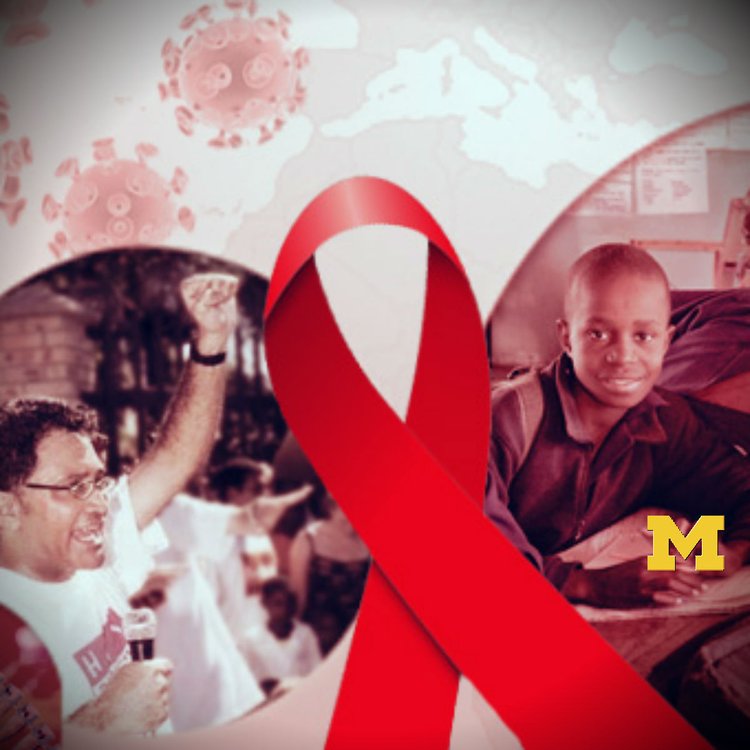
AIDS: Fear and Hope

What You'll Learn

  • Hear about the histories of the HIV/AIDS epidemic and personal narratives from those who contracted the disease as well as from caretakers.
  • Experts will share about HIV biology, transmission, testing, prevention, treatment, and the search for a cure.
  • How economics, politics, culture, social patterns, and law are all factors that affect the nature, appearance, and health outcomes of a disease.
7 Modules
14 Hours
2 hrs per module (approx.)
Rating

About AIDS: Fear and Hope

The basic biology of the virus, HIV, and the disease it causes, AIDS. The economic, social and political factors that determine who gets sick and who remains healthy, who lives and who dies. The progress of scientific research and medical treatments. The reasons for hope; the reasons for fear. (To get a glimpse of some of the materials that students have been posting on the course forums, go to @AIDSFAH or #AIDSFAH.)

Skills You'll Gain

  • Healthcare Quality
  • HIV Research
  • Public Health

What You'll Earn

Certificate of Completion:
Certificates of completion acknowledge knowledge acquired upon completion of a non-credit course or program.
Experience Type
100% Online
Format
Self-Paced
Subject
  • Social Sciences
Platform
Coursera
Welcome Message

Welcome to AIDS: Fear and Hope, a course that examines HIV/AIDS as both a medical condition and a global social phenomenon. You will explore the biology of HIV alongside the political, economic, cultural, and ethical forces shaping the epidemic. Through interdisciplinary perspectives, the course highlights why fear has been justified and how scientific, social, and activist efforts provide hope.
This abbreviated syllabus description was created with the help of AI tools and reviewed by staff. The full syllabus is available to those who enroll in the course.

Course Schedule

Module 1: Beginnings: A New Disease Surprises The World

  • Reading: Syllabus
  • Reading: Discussion Forum Guidelines
  • Reading: Welcome to Unit 1!
  • Reading: Video Schedule
  • Video: 01.01 - Mini-Intro (1): Terminology, Stigma
  • Video: 01.02 - A Snapshot of the Epidemic
  • Video: 01.03 - Mini-Intro (2): Suggested Books
  • Video: 01.04 - Memories of the Beginning: San Juan and Cambridge, Mass.
  • Reading: Help us learn more about you!
  • Reading: Clarification
  • Video: 01.05 - Some History
  • Video: 01.06 - Memories of the Beginning: Chicago and Philadelphia
  • Video: 01.07 - Mini-Intro (3): Learning about Science; The Bodily Fluids that Carry HIV
  • Video: 01.08 - HIV, Other Viruses, Other Species, Virus Hunters
  • Video: 01.09 - Mini-Intro (4): Talking About Sex
  • Graded: Unit 1 Quiz

Module 2: Transmission, Gender, Politics

  • Reading: Unit 2: What to expect
  • Video: 02.01 - Women, Gender Inequality, and HIV
  • Video: 02.02 - Sexual Transmission of HIV
  • Video: 02.03 - Taking a Sexual History
  • Video: 02.04 - Non-Sexual Transmission of HIV
  • Video: 02.05 - Four Presidents (1): Reagan
  • Video: 02.06 - Memories of the Beginning: Princeton and Washington, DC, and Ann Arbor, MI
  • Video: 02.07 - Memories of the Beginning: NIH
  • Graded: Unit 2 Quiz

Module 3: Testing (and Some Politics and Memories)

  • Reading: Welcome to Unit 3
  • Video: 03.01 - Working with African Ministers
  • Video: 03.02 - Memories of the Beginning: Detroit
  • Video: 03.03 - Future Ministers Get Tested
  • Video: 03.04 - Test Counselors
  • Video: 03.05 - Professor Tests Himself, Oral Swab
  • Video: 03.06 - Professor Tests Himself, Blood
  • Video: 03.07 - Four Presidents (2): Museveni
  • Video: 03.08 - Update on Testing
  • Video: 03.09 - 03.09 - Course Recap
  • Graded: Unit 3 Quiz

Module 4: Living With HIV

  • Reading: Unit 4 Preview
  • Video: 04.01 - Richard's Story - HIV Diagnosis, Coping, Early Life, Spiritual Quest
  • Video: 04.02 - Richard's Story - Living with HIV
  • Video: 04.03 - Bug Chasers and Gift Givers
  • Video: 04.04 - Four Presidents (3): Bush
  • Video: 04.05 - AIDS, Gender, Sexual Orientation Issues
  • Graded: Unit 4 Quiz

Module 5: Caring for Patients

  • Reading: Unit 5 Introduction
  • Video: 05.01 - Caring for Patients: Dr. Brown and Ms. Corkery at the Detroit Receiving Hospital (Part 1)
  • Video: 05.02 - Caring for Patients: Dr. Brown and Ms. Corkery at the Detroit Receiving Hospital (Part 2)
  • Video: 05.03 - Memories of the Beginning: St. Louis and Detroit
  • Video: 05.04 - Four Presidents (4): Mbeki
  • Video: 05.05 - AIDS and the Practice of General Medicine
  • Video: 05.06 - Caring for Patients: Dr. Riddell at the University of Michigan
  • Video: 05.07 - The Drugs: Dr. Riddell Describes Antiretroviral Therapy
  • Graded: Unit 5 Quiz

Module 6: Prevention, Art, Poetry

  • Reading: Unit 6 Introduction
  • Video: 06.01 - Needle and Syringe Exchange, Addiction, Harm Reduction
  • Video: 06.02 - Blood Nobility
  • Video: 06.03 - Gardenias
  • Video: 06.04 - HIV, Cultural Complexity, Art
  • Video: 06.05 - Vaccine
  • Video: 06.06 - Circumcision and Prevention
  • Video: 06.07 - Trusted Messengers in Zambia
  • Video: 06.08 - Outreach to African-American Ministers
  • Graded: Unit 6 Quiz

Module 7: Wrapping Up

  • Reading: For the last time . . .
  • Video: 07.01 - HIV and the Law
  • Video: 07.02 - The Criminalization of HIV
  • Video: 07.03 - The Search for a Cure
  • Video: 07.04 - The Cost of Drugs
  • Video: 07.05 - Infected but not Treated
  • Video: 07.06 - Anti-Retroviral Treatment: The Problems
  • Video: 07.07 - PrEP and PEP
  • Video: 07.08 - Case Management and Community Health Workers
  • Video: 07.09 - Activism
  • Video: 07.10 - Farewell
  • Graded: Unit 7 Quiz

Grading Policy

Learners must pass all quizzes with a score of 70% or higher to complete the course. Quizzes may be attempted multiple times. There are quizzes in each module that account for 100% of your final grade.

Grading Policy

Learners must pass all quizzes with a score of 70% or higher to complete the course. Quizzes may be attempted multiple times. There are quizzes in each module that account for 100% of your final grade.

Course content developed by U-M faculty and managed by the university. Faculty titles and affiliations are updated periodically.

Beginner Level

No prior experience required
Enrollment Options

Individuals

This experience is available to individual learners on the following platforms:

U-M Community

Students, faculty, staff, and alumni of the University of Michigan get free access.

Organizations

Special pricing and tailored programming bundles available for organizational partners.

What are Coursera and edX?

Michigan Online learning experiences may be hosted on one or more learning platforms. Platform features may vary, including payment models, social communities, and learner support.

Coursera

  • Hosts online courses, series, and Teach-Outs from Michigan Online
  • Enroll and preview courses anytime
  • May earn a non-credit certificate from Coursera

edX

  • Hosts online courses and series from Michigan Online
  • Many offer a free (limited) audit option
  • May earn a non-credit certificate from edX

For more information visit the What are Coursera and edX? FAQ section

Reviews and Ratings

4.8

378 Ratings from Coursera

Michigan Online
For You

Sign up for a Michigan Online account to customize your experience!